How Hedge Thickness Filters Road Noise & Valley Wind Turbulence
When properties in Pontypool, Newport, and Abergavenny face busy A-roads or severe valley wind funnelling, homeowners often assume a solid wall or timber fence is the ultimate shield. Here is why a properly maintained, dense evergreen hedgerow outperforms solid barriers at filtering gale-force gusts and diffusing tyre and engine noise.
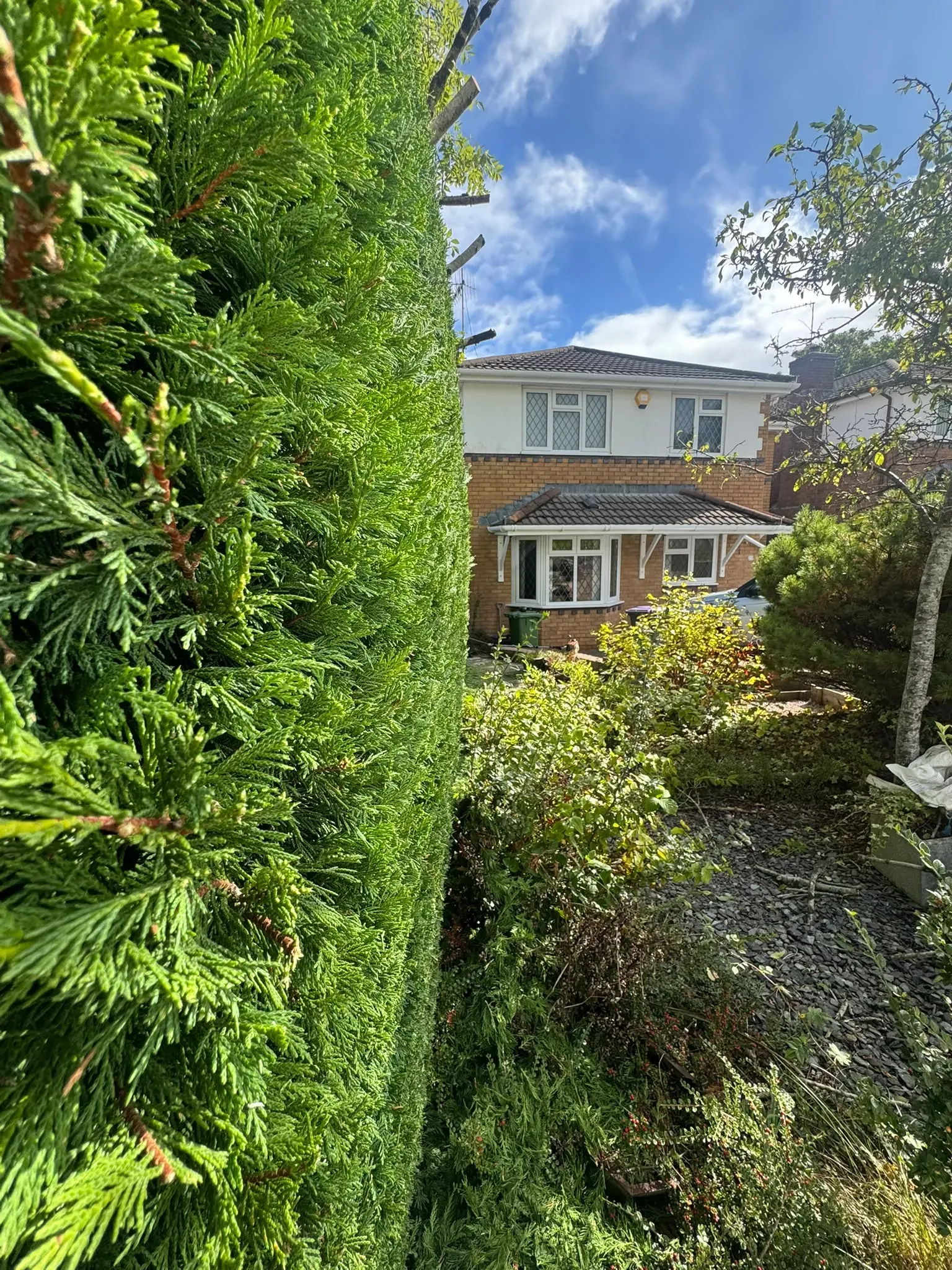
A tightly clipped, multi-layered conifer boundary hedge in Torfaen acting as both an acoustic buffer and wind filter.
1. Wind Filtration vs Deflection
Solid walls force wind violently upwards, creating destructive vortex eddies on the leeward side. A 40–50% porous hedge filters wind speed smoothly across up to 10 times its height.
2. High-Frequency Noise Diffusion
Dense evergreen foliage, woody stems, and leaf litter scatter high-frequency tyre hiss (2,000–8,000 Hz) by 3 to 8 dB, while eliminating the visual stress of passing vehicles.
3. Structural Pruning Matters
An unpruned hedge turns hollow and leggy at the base, letting road noise and cold valley draughts straight underneath. Battering (tapering) sides keeps foliage thick top-to-bottom.
The Physics of Valley Wind: Filtering vs. Turbulent Eddies
Across Pontypool, Blaenavon’s lower fringes, and exposed ridges in Monmouthshire, autumn and winter gales funnel sharply through the valleys. When a homeowner installs an impermeable barrier—such as a high brick wall or a solid timber fence—directly into the path of a 60mph valley gust, the air cannot pass through it.
Instead, the air mass compresses against the front face of the barrier and shoots violently upwards over the top edge. This creates a sharp drop in atmospheric pressure immediately behind the wall or fence. As the fast-moving air passes over the top, that low-pressure zone sucks the wind downwards in a circular, swirling motion known as a leeward turbulent eddy (or roller vortex).
Why Solid Barriers Can Increase Garden Damage:
- ▪ Downward Slamming Gusts: Within a distance of 2 to 5 times the height of a solid wall, swirling eddies crash downward onto greenhouse roofs, patio furniture, and sheds with greater turbulence than an open field.
- ▪ Post Footing Failure: Solid fences take 100% of the kinetic wind load. In wet Torfaen clay soils, standard timber posts frequently snap at ground level (which is why we specify cold-rolled steel Birkdale DuraPost systems when a solid fence is required).
- ▪ Corner Acceleration: Wind forced around the ends of a solid wall accelerates, creating fierce wind tunnels down side alleyways and garden gates.
By contrast, a well-maintained garden hedgerow acts as a semi-permeable diffuser. Aerodynamic studies consistently show that a boundary with 40% to 50% optical porosity delivers the greatest protected zone. As wind passes through thousands of closely packed needles, leaves, and flexible twigs, friction strips away kinetic energy. Rather than creating a low-pressure vacuum behind the hedge, a gentle stream of slow-moving air bleeds through the foliage, preventing the overhead wind from crashing back down into the garden.
Acoustic Diffusion: How Hedge Thickness Filters Road Noise
Properties bordering the A4042 between Pontypool and Newport, the A465 Heads of the Valleys corridor, or busy town approaches in Chepstow and Caldicot deal with persistent traffic noise. Sound travels in pressure waves measured across frequencies (Hertz) and intensity (decibels, dB).
It is important to give straight answers about what a hedge can and cannot do acoustically. Low-frequency rumble (such as heavy HGV engines below 250 Hz) has long wavelengths that pass through almost anything short of a thick masonry earth bund. However, the most intrusive and irritating component of modern road noise is mid-to-high frequency tyre-on-tarmac hiss and aerodynamic whine (1,000 Hz to 8,000 Hz), particularly on wet Welsh roads.
Thermo-Viscous Absorption & Scattering
When high-frequency sound waves strike a thick evergreen hedge (such as Yew, Laurel, or Griselinia), the overlapping leaves and woody internal branches scatter the sound waves in thousands of directions, converting acoustic energy into microscopic amounts of heat through friction.
The Soft Ground Impedance Effect
Hard paving and brick walls reflect sound waves, creating an echo chamber between your house and boundary wall. The porous humus soil and leaf litter beneath an established hedgerow absorb downward-deflected sound waves rather than bouncing them back toward your patio.
How Thick Does a Hedge Need to Be to Reduce Decibels?
A thin, single-stemmed deciduous hedge that loses its leaves in winter offers virtually zero acoustic reduction (less than 1 dB). To achieve a noticeable acoustic drop of 3 dB to 6 dB in high-frequency road noise—which the human ear perceives as roughly cutting the harshness of tyre noise by a quarter to a third—a domestic hedgerow needs specific physical dimensions:
- Minimum Depth (Thickness): At least 1.2 metres to 2.5 metres deep from front face to rear face. Where space permits in larger Abergavenny or rural Monmouthshire plots, a double-staggered planting row clipped into a single wide mass performs best.
- Leaf Mass & Geometry: Broad, leathery evergreen leaves (like Cherry Laurel or Portuguese Laurel) or densely packed small needles (like Yew or tightly clipped Leylandii) with woody internal branching.
- Ground-to-Crown Density: Zero gaps at the base. Sound behaves like water through a gap—if the lower 40cm of your hedge consists of bare trunks, tyre noise shoots directly off the tarmac at wheel height into your garden.
Technical Comparison: Hedgerows vs. Solid Barriers
Choosing between new fencing installation, masonry walls, or managed hedging depends on your garden’s aspect, boundary width, and exposure. In many exposed South Wales gardens, a hybrid approach (a sturdy featheredge fence paired with a planted hedge row) gives the strongest combined performance.
| Performance Metric | Dense Evergreen Hedge (1.5m+ Thick) | Solid Closeboard Fence / Wall | Fence + Hedge Hybrid |
|---|---|---|---|
| Gale-Force Wind Behaviour | Filters wind speed by 50–70% smoothly; eliminates downward vortex eddies. | Deflects wind upwards; creates heavy turbulent eddies 2x–5x height behind fence. | Hedge breaks wind velocity before it hits the fence, protecting posts and stopping eddies. |
| Protected Leeward Distance | Up to 10x–12x the height of the hedge. | Only 2x–3x the height before turbulence drops back to ground level. | 8x–10x the height of the combined barrier. |
| Road Noise & Acoustics | Diffuses high-frequency tyre hiss (3–6 dB); absorbs sound reflection; replaces traffic noise with natural leaf rustle. | Blocks direct line-of-sight sound (5–8 dB if zero gaps), but reflects internal garden echoes. | Best acoustic shield (up to 10 dB reduction): solid core blocks mid-tones while foliage absorbs high frequencies. |
| Particulate & Brake Dust Trapping | Waxy leaves trap airborne diesel particulates and road spray dust. | Minimal particulate capture; wind carries dust over top edge. | High particulate and road spray filtration. |
| Storm Survival on Valley Slopes | Deep root network stabilises wet clay banks; branches flex under load. | Vulnerable to panel blowouts unless built with DuraPost steel posts. | Exceptional durability in exposed Torfaen and Monmouthshire locations. |
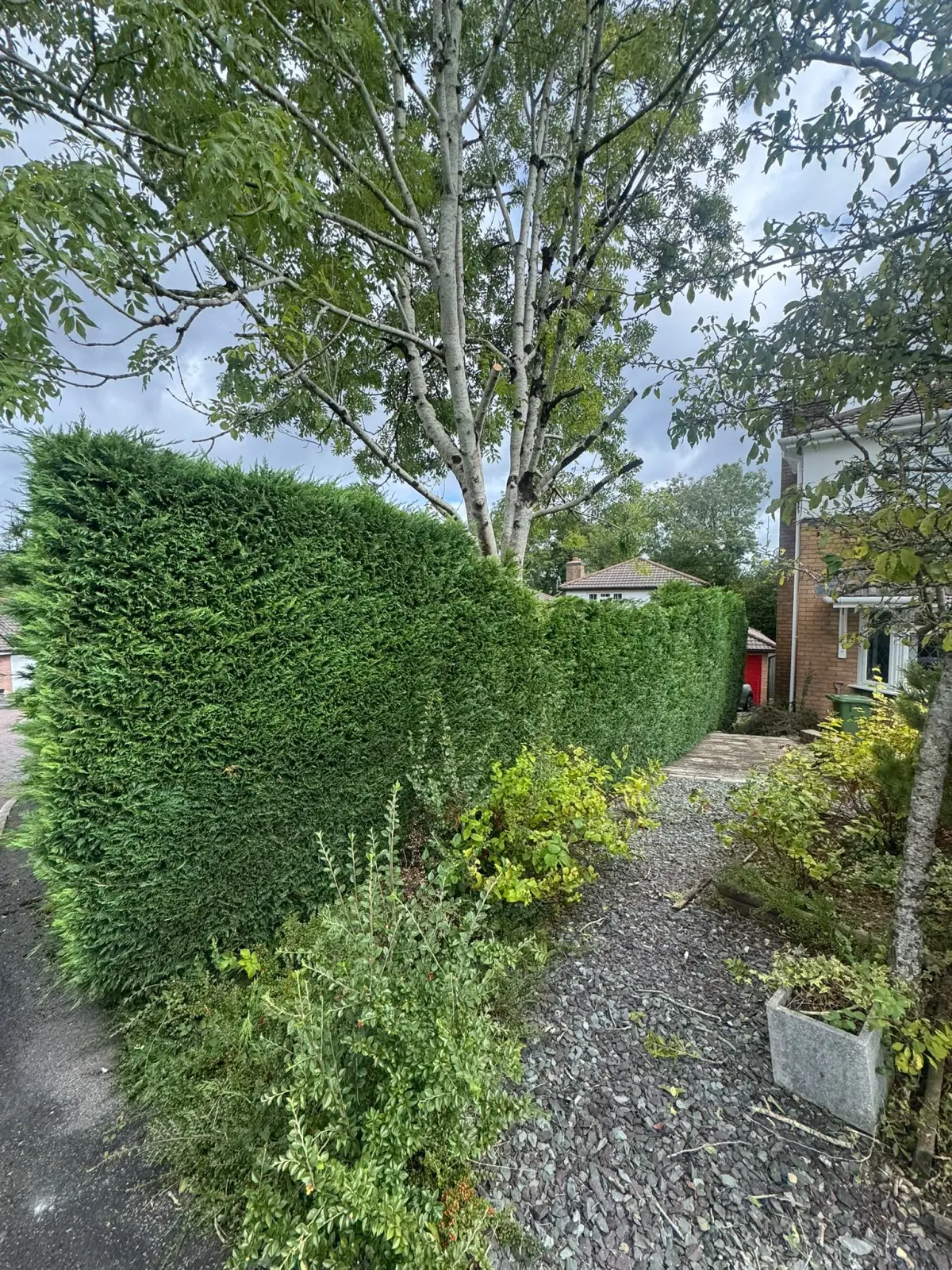
Why Neglect Ruins a Hedge’s Acoustic & Wind Shield
Many homeowners assume that letting a hedge grow completely wild makes it thicker. In reality, unpruned hedges put all their growth energy into the top tips (apical dominance).
Within two or three seasons without professional hedge trimming, the upper canopy shades out the lower branches. The bottom metre dies back to bare, skeletal trunks—creating a wind tunnel at ground level and letting road noise straight through.
How We Trim Hedgerows for Maximum Density & Storm Resilience
Whether we are maintaining a long roadside Beech or Laurel boundary in Abergavenny, or shaping a tall conifer windbreak on a Pontypool hillside, the way a hedge is cut determines how well it performs over the next decade. At JDP Outdoor Solutions, we use structural arboricultural techniques rather than simply buzzing the sides flat:
Battering (A-Frame Tapered Sides)
We cut tall hedges with a subtle inward slope (narrower at the top than at the base). This ensures Welsh daylight reaches the lowest leaves all year round, keeping the base thick and leafed-out right down to the turf or gravel board. It also prevents heavy winter snow from sitting on wide, flat tops and splitting branches apart.
Stimulating Dormant Lateral Buds
Regular, timed trimming removes the terminal growth tip on each shoot. This triggers auxiliary buds further back along the stem to burst into growth, turning single long whips into a dense, interwoven mesh of small twigs that scatter sound waves and filter wind.
Height Reduction to Prevent Root Rock
When Leylandii or Lawson Cypress hedges exceed 4 to 5 metres on wet valley slopes, they become top-heavy sails. Keeping the crown height controlled reduces leverage on the root plate during autumn storms while encouraging thicker side growth.
Best Hedgerow Species for Welsh Valley Climates & Roadside Plots
Not every shrub tolerates heavy Torfaen rainfall, clay soils, or salt spray from wintry roads. Based on our work across Pontypool, Newport, and Monmouthshire, here is how common boundary species perform:
- Cherry Laurel & Portuguese Laurel (Prunus) Large, thick, glossy evergreen leaves provide excellent high-frequency acoustic reflection and absorption. Tolerates shade, roadside pollution, and hard pruning if it becomes overgrown.
- English Yew (Taxus baccata) The gold standard for long-term acoustic and wind filtration. Extremely dense needle structure, thrives in historic towns like Abergavenny and Chepstow, and Unlike conifers, Yew can regenerate new green shoots even if cut back into old brown wood. (Note: toxic to livestock if bordering agricultural fields).
- Beech (Fagus sylvatica) & Hornbeam (Carpinus betulus) Hornbeam handles heavy, wet South Wales clay soils better than Beech. While deciduous, both species retain their crisp copper-brown dead leaves throughout winter (marcescence) when trimmed in late summer, offering year-round wind diffusion and a soft rustling sound that masks road noise.
- Leylandii & Thuja (Conifers) Fast-growing and unmatched for rapid windbreak creation on exposed hillsides. However, they must be trimmed at least once or twice a year; if left overgrown and cut back into bare brown wood, most conifers will not regrow. If a conifer hedge has failed or blown over, we offer full hedge removal and stump grinding.
Legal & Environmental Rules: Bird Nesting, High Hedges & Waste
Before carrying out major hedge reductions or boundary alterations in Torfaen, Monmouthshire, or Newport, three strict UK regulations apply:
1. Wildlife & Countryside Act 1981
Dense acoustic hedges are prime habitat for nesting birds between March and August. While light maintenance trimming can proceed following a thorough physical nest inspection, heavy reductions or removals are best scheduled between September and February.
2. High Hedges (Part 8 Anti-Social Behaviour Act)
Evergreen or semi-evergreen hedges over 2 metres tall that block a neighbour’s light can trigger council intervention by Torfaen County Borough Council, Monmouthshire, or Newport City Council. Routine annual topping prevents neighbour disputes.
3. Highway Overhang & Licensed Waste
Roadside hedges must not obstruct footpaths or street signs. JDP Outdoor Solutions holds a Full Upper Tier Waste Carrier Licence, meaning every load of thorny clippings and woody arisings is chipped and disposed of legally via authorised South Wales transfer stations.
Frequently Asked Questions: Acoustic & Windbreak Hedges
When is the best time of year to cut back large hedges in South Wales?
Light maintenance trimming to keep faces neat can be carried out during the growing season after a careful check for active bird nests. However, heavy height reductions or reshaping thick roadside hedges is best handled outside the core bird nesting window (March to August)—ideally in autumn or late winter—to protect local wildlife and avoid frost damage to fresh cuts.
My conifer hedge is bare and brown at the bottom—can it be fixed to block road noise again?
Most conifers (like Leylandii) will not sprout new green growth from bare, old wood. If the bottom metre is hollow, wind and traffic noise will funnel underneath. In these cases, we can either install a low timber featheredge fence or gravel board structure along the base to seal the acoustic gap, or carry out full hedge removal and stump grinding so you can replant or fit a new DuraPost fence.
Should I put a fence behind my hedge for maximum road noise reduction?
Yes, if you have the boundary width. Combining a heavy-duty vertical featheredge fence (which has no air gaps between overlapping pales) with a dense evergreen hedge planted in front of it offers the best of both worlds: the hedge filters high-frequency tyre noise and breaks the force of valley winds, while the solid timber fence blocks mid-frequency noise and provides instant security.
Are you licensed to take away all the hedge clippings and branches?
Yes. JDP Outdoor Solutions holds a Full Waste Carrier Licence regulated by Natural Resources Wales. We sweep down pavements, driveways, and lawns after every hedge cut and transport all green waste to authorised South Wales recycling facilities.
Related Services & Guides
Hedge Trimming in Pont-Y-Pŵl / Pontypool
Hedge trimming, shaping and reduction in Pontypool, Newport and Abergavenny, planned around nesting season. Call 01633 603306.
TPO and Conservation Area Tree Rules in South Wales
Learn the rules for Tree Preservation Orders (TPOs) and Conservation Areas across Torfaen, Monmouthshire, and Newport before pruning or felling trees.
Spotting Ash Dieback & Fungal Decay in Garden Trees
Identify early signs of ash dieback, honey fungus, and basal rot in garden trees across Pontypool, Newport, and Monmouthshire before limbs fail.
Why Leaving Old Tree Stumps Can Harm Your Garden
Leaving felled tree stumps to rot invites honey fungus, pests, and root regrowth. Discover why stump grinding in Pontypool protects your garden.
DIY Stump Digging & Eco-Plugs vs Mechanical Removal
Compare manual digging, chemical eco-plugs, and mechanical stump grinding in Pontypool. Call JDP Outdoor Solutions on 01633 603306 for a free quote.
Birkdale DuraPost vs Concrete & Timber Fence Posts
Compare galvanised steel DuraPost with concrete and timber fence posts for South Wales gardens. Built for 110mph winds and wet soils. Call 01633 603306.
Who Owns the Hedge? Boundary Rules Before Removal
Who owns a boundary hedge? Learn how to check title deeds, planting lines, and High Hedges rules before removing hedges in Pontypool and South East Wales.
How to Stop Fence Panels Rattling & Bowing in the Wind
Stop fence panels rattling in slotted posts during high valley winds. Practical guide on wedges, clips, and heavy-duty panel upgrades in Pontypool.
Why Patios Sink: Sub-Bases & Full Mortar Beds Explained
Discover why spot-bedding fails in wet South Wales soils and how compacted MOT Type 1 sub-bases and full mortar beds prevent rocking slabs.
What Items Can Be Taken in a Garden & Rubbish Clearance?
Find out what our licensed rubbish clearance covers across Pontypool and Torfaen, from old fencing and sheds to banned hazardous items like asbestos.
Child-Safe Latches & Self-Closing Springs for Gates
Keep toddlers and dogs safe with heavy-duty self-closing hinges and magnetic gate latches. Installed across Pontypool and South East Wales.
Sizing a New Patio: Dining Sets, BBQs & Walkways
Calculate square metre footprints for dining sets, chair pull-out clearances, and door transitions with our Pontypool patio laying specialists.
Hiding Unsightly Drain Covers in New Garden Paving
Hide unsightly drain lids in your new garden patio. See how JDP Outdoor Solutions fits recessed infill trays in Pontypool, Newport, and Monmouthshire.
Managing Slurry & Drain Runoff During Driveway Washing
Prevent blocked gullies and mud runoff during driveway pressure washing in Pontypool. Practical advice on silt traps, sludge control, and soakaways.
How Commercial Chippers Reduce Branches by 80% Volume
See how commercial hydraulic wood chippers reduce bulky conifer brash and hawthorn by 80% in minutes. Licensed green waste clearance across Pontypool.
Canopy Shaping to Stop Solar Panel & Dish Shading
High tree canopies can cut solar panel output by 40%. Learn how targeted crown reduction in Pontypool restores sunlight and satellite line of sight.
Contemporary Slatted Panels vs Solid Lap: Light & Shade
Compare hit-and-miss slatted panels with solid waney lap fencing for light flow, privacy, and wind resistance across Pontypool and South East Wales.
Why Yew & Cherry Laurel Clippings Must Leave Site Fast
Wilted yew and crushed laurel clippings pose lethal toxin risks to pets and livestock. Book licensed green waste removal in Pontypool on 01633 603306.
What a Legal Waste Transfer Note Actually Looks Like
Learn what a legal Waste Transfer Note looks like, from EWC numbers to SIC codes. Licensed rubbish removal in Pontypool and South Wales. Call 01633 603306.
Checking Old Log Piles & Compost Heaps for Slow Worms
How we safely dismantle old compost bays, sleepers, and log piles in Pontypool to protect slow worms and amphibians during licensed garden clearances.
From Your First Call to a Clear Site
JDP Outdoor Solutions is run by Jac Price from Pontnewynydd, Pontypool. Jac is registered with Natural Resources Wales as an upper-tier waste carrier (CBDU035917). Based at Pontnewynydd, Pontypool NP4 6PR.
Rated 5.0 from 6 Google reviews.Read them on Google
Recent Jobs, in Our Customers' Words
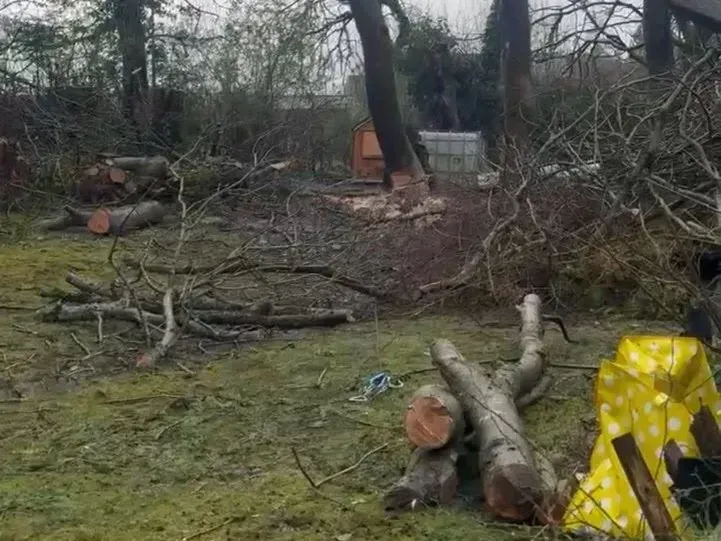
13 tall pine trees felled, stumps ground and a new fence fitted
“Jac and his team were very accommodating with dates and timing. They cut down 13 old tall pine trees, removed and ground the stumps. They completed the fence work in the specified time and left after thoroughly cleaning up the work area.
We are very pleased with the new fence.
Thank you Jac. MB.”
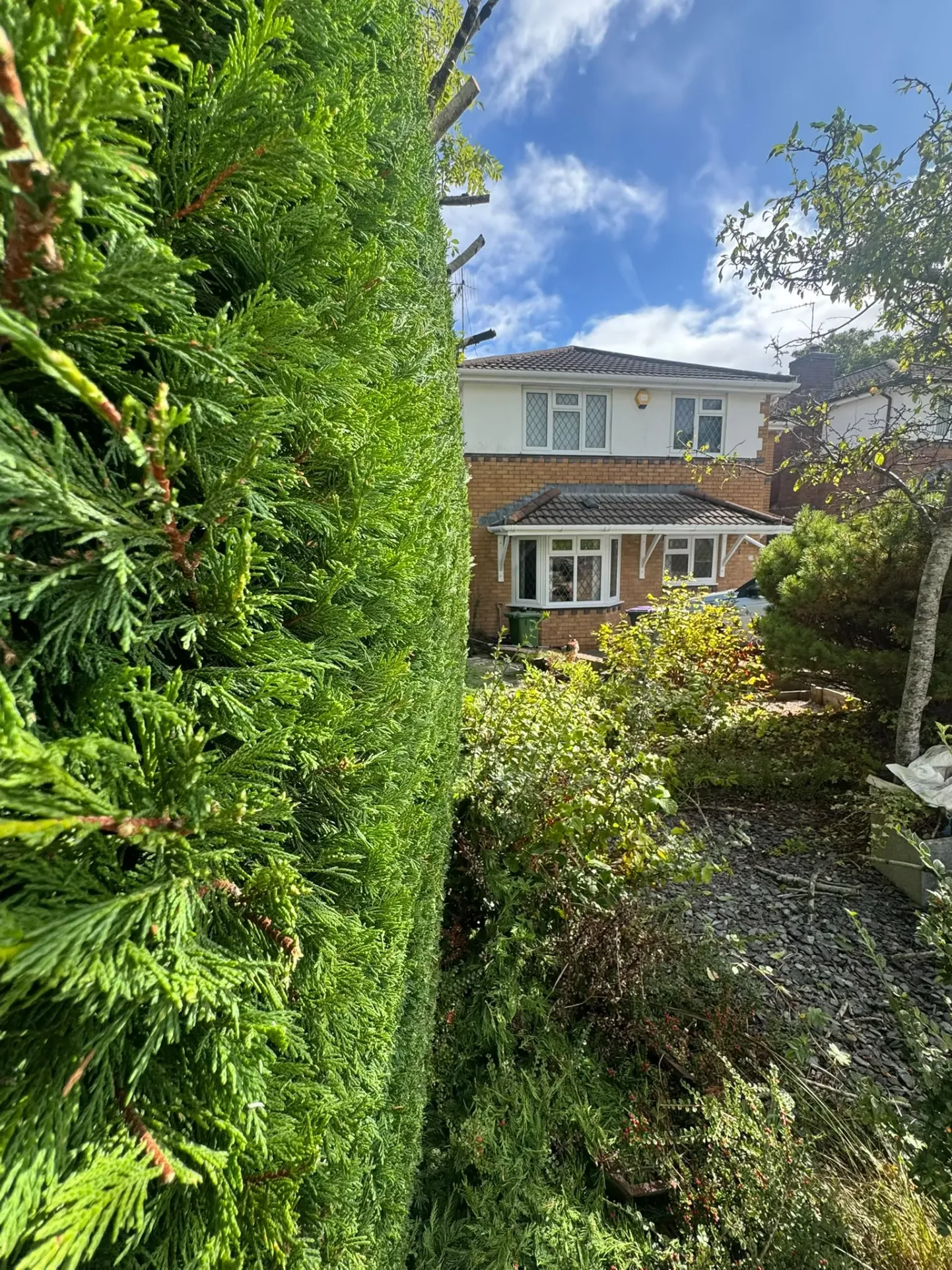
Hedges cut back and the garden tidied
“Had J.D.P Outdoor Solutions in to cut back our hedges and tidy up the garden. They did a brilliant job and made a huge difference to the whole area. Friendly, reliable and very tidy workers. Would definitely use them again.”
-
01
Call or Ask for a Visit
Call 01633 603306, 7am to 7pm, seven days a week, or request a quote online, and we arrange a time to look at the job.
-
02
Checks and a Clear Price
We look at the job on site and give you a clear price before any work starts. For trees, we check for a Tree Preservation Order or conservation area first. If council consent is needed, you know before the job is booked.
-
03
Careful Work on the Day
In tight gardens, trees come down in sections on rigging to protect your property. Heavy hedge cutting is planned around the bird nesting season, in line with the Wildlife and Countryside Act.
-
04
A Clear Site
Stumps can be ground below lawn level. Branches, old fencing and garden waste are taken away under our waste carrier registration to licensed South Wales transfer and recycling depots, never left in a lay-by.
Ready to Smarten Up Your Garden Boundary or Windbreak Hedge?
Call Jac and the team on 01633 603306 for a free quote on your hedge trimming, fencing, patio, or tree care project across Pontypool, Torfaen, Newport, and Monmouthshire.
Dealing with a storm-damaged or hazardous tree? Call our emergency tree line on 01633 603306.