Why Solid 6ft Panels Often Ruin North-Facing & Terraced Gardens
Across the steep hillside terraces of Pontypool, the enclosed Victorian courtyards of Abergavenny and Chepstow, and dense modern housing developments in Newport and Caldicot, gardens are frequently compact and bordered closely by neighbouring properties. When homeowners book a fence panel replacement, the natural instinct is to install solid 1.8-metre (6ft) panels along every boundary to block out overlooking windows.
However, in a north-facing garden or a narrow valley plot where the sun drops behind the hill early, erecting an unbroken wall of solid timber creates a cold, damp canyon effect. Solid barriers cast heavy, permanent shadow across your paving. In the wet South Wales climate, a patio deprived of sunlight and airflow stays saturated for months, accelerating green algae, black spot lichen, and moss build-up on natural stone and concrete slabs.
Selecting the right fence profile allows you to filter warm, golden evening sunlight onto your seating area and let destructive valley winds pass safely through the boundary—without putting your garden on display to next door.
Comparing the 4 Main Fence Panel Profiles
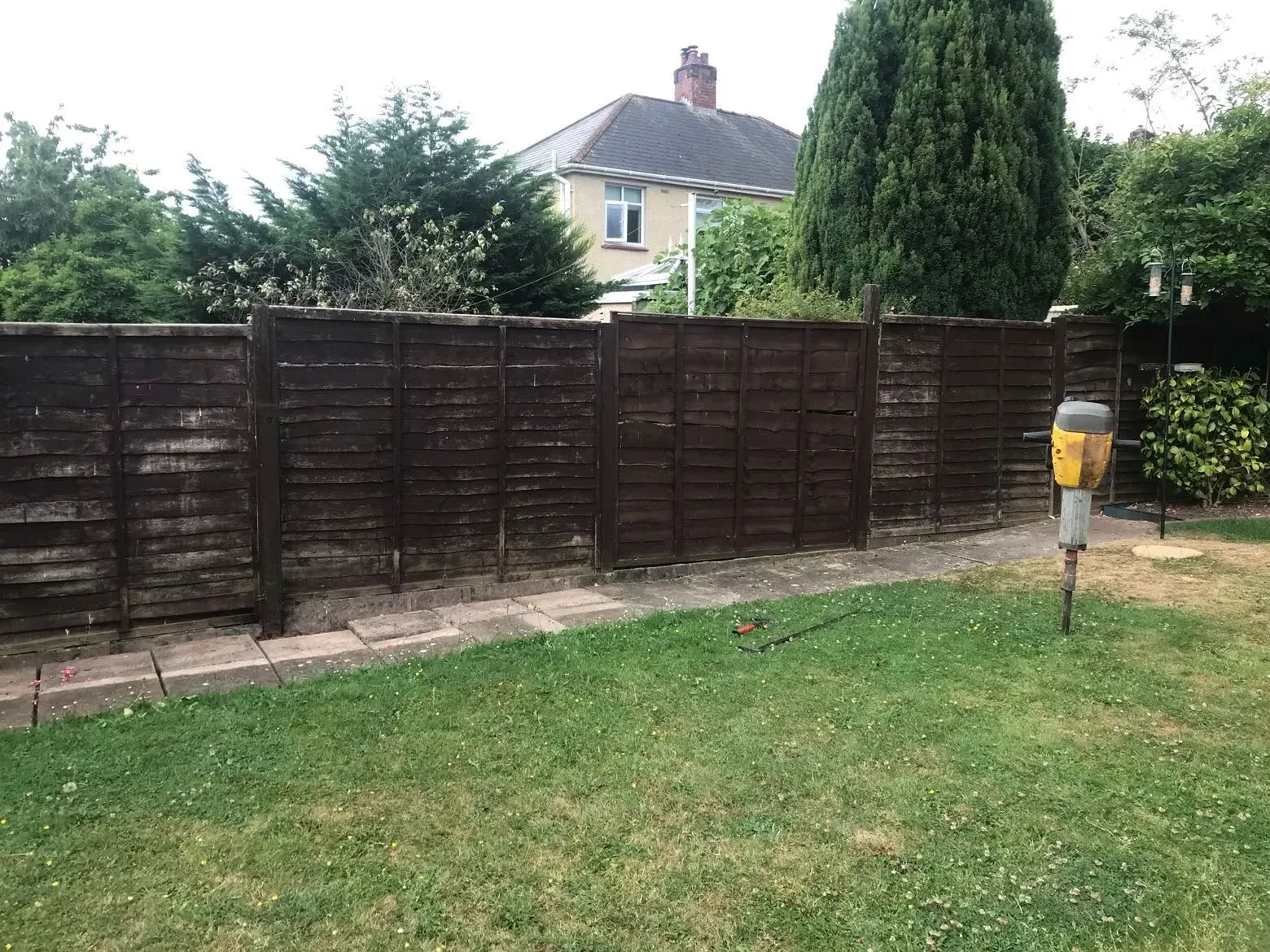
1. Traditional Solid Waney Lap (Overlap) Panels
Constructed from horizontal strips of thin waney-edge timber nailed over a lightweight batten frame, standard lap panels are the budget-friendly staple seen in thousands of older gardens.
- Light Flow: Zero. Casts a solid, dark shadow across adjacent lawns and patios.
- Privacy Level: High when brand new, though thin slats frequently warp and shrink in summer heat, opening up unsightly horizontal cracks.
- South Wales Weather Durability: Poor on exposed hillside plots. Because the panel has zero airflow permeability and relies on thin framing battens, autumn gusts funnelled down the Torfaen valleys regularly pop the slats out or snap the panels cleanly in half.
2. Contemporary Single-Sided Venetian Slatted Panels
Venetian panels feature smooth, planed horizontal timber battens (typically 45mm to 70mm deep) mounted across vertical back supports with consistent 10mm to 20mm spacing between each rail.
- Light Flow: Excellent. Low-angle afternoon and evening sun filters through the horizontal slots, casting attractive architectural light bands across north-facing patios and brightening dark corners.
- Privacy Level: Medium. When viewed from an angle (such as a neighbour walking past or looking down from an angled window), the depth of the timber slats obscures sightlines. When viewed dead-on at close range, you can see through the gaps.
- Best Application: Ideal for dividing internal garden zones, screening a patio where the neighbouring boundary is already hedged, or installing as a 300mm–600mm topper panel above a solid 1.2m fence run.
3. Double-Sided Hit-and-Miss Horizontal Slatted Panels
For homeowners who want the sleek, modern aesthetic and light filtration of Venetian slats without sacrificing boundary security, double-sided hit-and-miss panels are the gold standard. Horizontal slats are fixed alternately to both faces of the central vertical battens so that a slat on your side overlaps the gap on your neighbour's side.
- Light Flow: Good. Ambient daylight and low golden evening sun bounce between the staggered slats, removing the oppressive "boxed-in" feeling of a solid wall.
- Privacy Level: High (approx. 85%–90%). Direct, straight-on sightlines from neighbouring patios are completely blocked by the alternating boards. Only someone standing right against the fence peering at a steep upward or downward angle can catch a glimpse through.
- South Wales Weather Durability: Exceptional. Wind passes around the alternating slats rather than slamming against a flat face, dramatically reducing stress on your fence posts while look identical from both properties.
4. Heavy-Duty Solid Featheredge (Closeboard) Panels & Runs
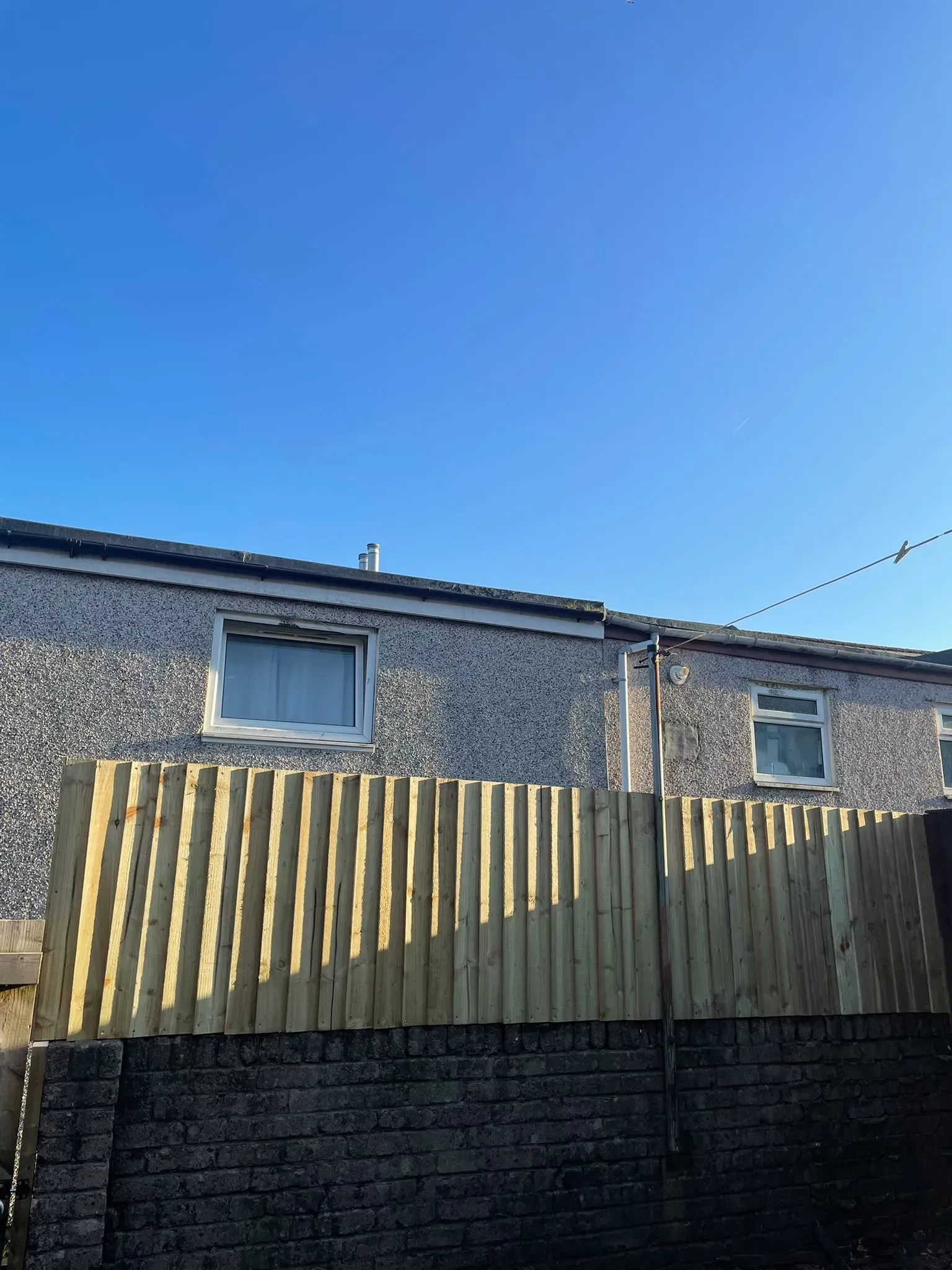
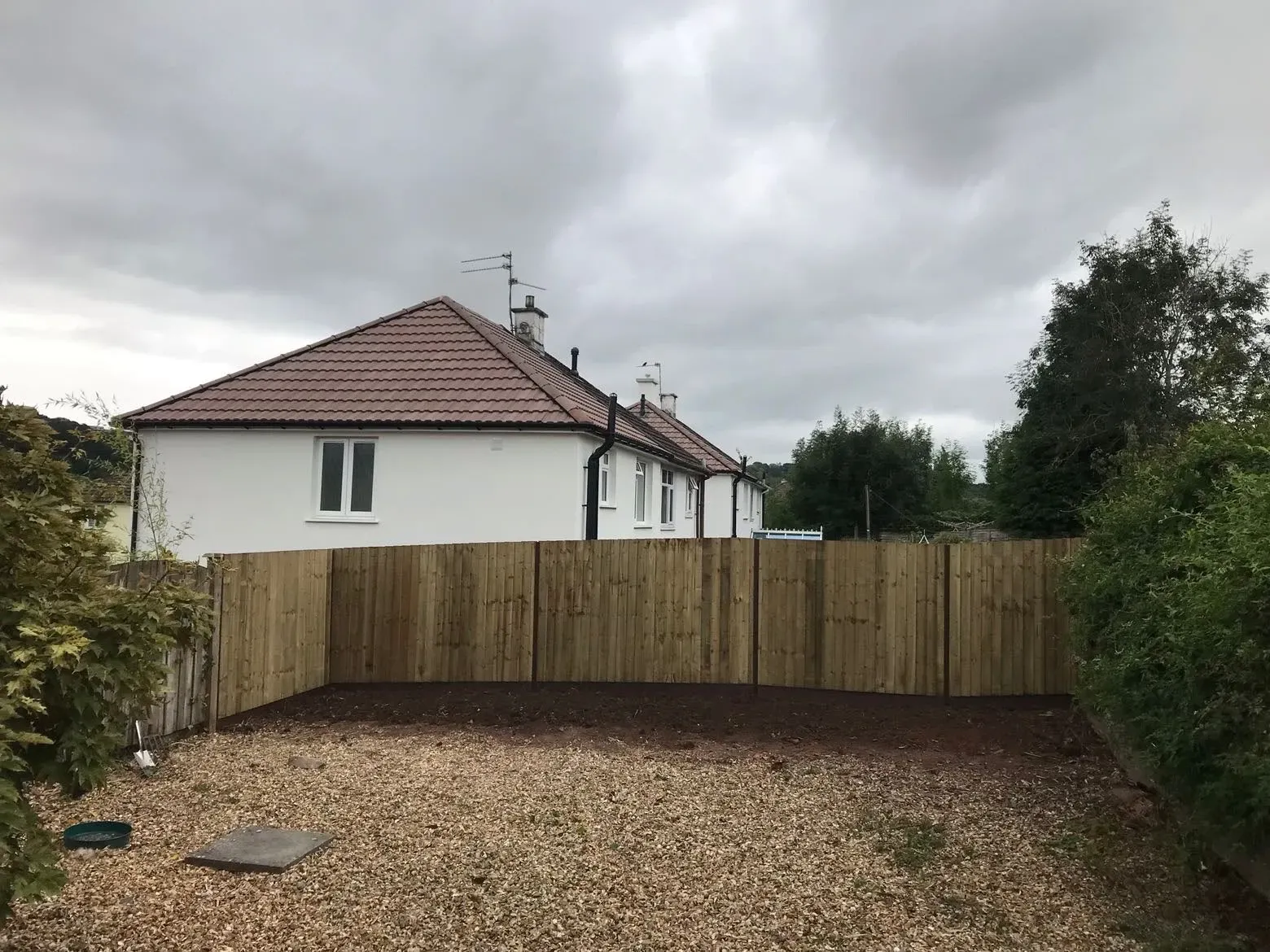
When 100% total privacy and dog-proof containment are non-negotiable, upgrading from flimsy waney lap to vertical featheredge fencing is the industry-standard solution. Thick, overlapping vertical taper-sawn pales are nailed to heavy horizontal arris rails.
- Light Flow: Zero through the main body, though frequently paired with a 1ft slatted Venetian trellis topper to let evening sun reach the patio.
- Privacy Level: 100% complete privacy with no shrinkage gaps.
- South Wales Weather Durability: Built for harsh terrain, especially when paired with Birkdale DuraPost galvanised steel posts.
At-a-Glance Comparison: Light, Privacy & Valley Wind Performance
| Panel Type | Sunlight Filtration | Direct Privacy | Airflow & Wind Relief | Typical Lifespan (Treated) |
|---|---|---|---|---|
| Solid Waney Lap | 0% (Heavy Shade) | 95% (Can warp/gap) | Poor (High blowout risk) | 5–8 Years |
| Single Venetian Slatted | 40%–50% (Bright & Open) | 60% (Angled screening) | Excellent (Low wind drag) | 12–15+ Years |
| Double Hit-and-Miss Slatted | 20%–30% (Filtered Glow) | 90% (Blocks direct views) | Very High (Diffuses gusts) | 15+ Years |
| Solid Featheredge + Slatted Topper | Top 300mm filters evening sun | 100% up to eye level | Moderate (Relieves top drag) | 15–20 Years |
The Smart Compromise: 5ft Solid Panels with a 1ft Slatted Topper
If you have dogs, young children, or a hot tub on your patio, you may feel uncomfortable having slatted gaps all the way down to the gravel board. However, you still want that critical final hour of evening sunshine dipping over your western or southern boundary into a north-facing seating area.
The most popular configuration we install across Torfaen and Monmouthshire is a 1.5-metre (5ft) solid featheredge or closeboard panel topped with a 300mm (1ft) Venetian or hit-and-miss slatted trellis section. Because average seated eye level on a garden patio is roughly 1.1 to 1.2 metres above the slabs, a 1.5-metre solid base keeps you completely hidden while dining or relaxing. Meanwhile, the upper 300mm slatted zone lets warm evening rays stream into the garden and slices the top wind-load pressure where leverage on the fence post is greatest.
UK Planning Rules, Post Compatibility & Common Mistakes
Before slotting new slatted or hit-and-miss panels into your existing garden boundary, keep these practical trade rules in mind:
-
01
The 2-Metre Permitted Development Limit: Across Torfaen County Borough Council, Monmouthshire County Council, and Newport City Council, rear and side boundary fences can be erected up to 2.0 metres (approx. 6ft 6in) from ground level without planning permission—including any slatted trellis topper and gravel board. If the boundary fronts a highway or public footpath, the limit drops to 1.0 metre.
-
02
Checking UK Metric vs Imperial Post Widths: Standard UK prefabricated fence panels measure 1828mm (6ft) wide. Many modern imported Venetian panels are manufactured to continental metric widths of 1800mm. If you slide an 1800mm slatted panel into existing slotted concrete posts spaced for 1828mm waney lap panels, it will rattle loose or blow straight out. We fit treated timber infill adapter strips or replace damaged supports during fence post repairs so every panel locks in tightly.
-
03
Preventing Ground Rot with Gravel Boards: Whether you choose slatted hit-and-miss or solid panels, timber must never sit directly in wet Welsh clay soil. Always sit the bottom panel rail on a concrete or UC4 pressure-treated timber gravel board, and pair the run with a matching custom garden side gate for secure perimeter access.
-
04
Restoring Shaded Patios After Fence Upgrades: Once you swap dark, light-blocking lap panels for bright slatted fencing, years of damp shade on your flagstones will be revealed. Combining your fence upgrade with commercial patio jet washing and patio repointing transforms a gloomy yard into a bright outdoor room.
Frequently Asked Questions
Can you replace broken fence panels with slatted panels without replacing the whole fence?
Yes. Where your existing concrete or timber posts are still plumb and structurally sound in the ground, we can slide out damaged waney lap panels and slot in new hit-and-miss, Venetian, or heavy-duty closeboard panels. If there is a slight width difference between metric (1800mm) and imperial (1828mm) panels, we fit pressure-treated packing battens so the new panels sit securely without rattling in the wind.
Why should I choose DuraPost steel fence posts if my old posts have rotted?
As a Birkdale DuraPost Trusted Installer, we recommend DuraPost cold-rolled galvanised steel posts whenever rotten timber or cracked concrete posts need replacing. DuraPost will never rot, warp, or crack in damp valley soil, is tested to withstand winds up to 110mph, and features sleek powder-coated profiles (such as Anthracite Grey or Olive Grey) that pair superbly with modern horizontal slatted timber panels.
Are you licensed to take away our old, rotten waney lap fence panels?
Yes. JDP Outdoor Solutions holds a full Upper Tier Waste Carrier Licence regulated by Natural Resources Wales. Every broken panel, concrete post lump, and green waste offcut is legally removed from your property and processed through authorised South Wales waste transfer stations—never left on your driveway.