Why Leaving Old Tree Stumps to Rot Causes Serious Garden Problems
Once a problem tree has been felled, it is tempting to leave the remaining timber base in the ground to decay on its own. Across damp Welsh valley soils in Pontypool, Torfaen, and Monmouthshire, an untreated stump rarely stays dormant—it becomes a breeding ground for invasive honey fungus, vigorous root suckers, and lawn hazards.
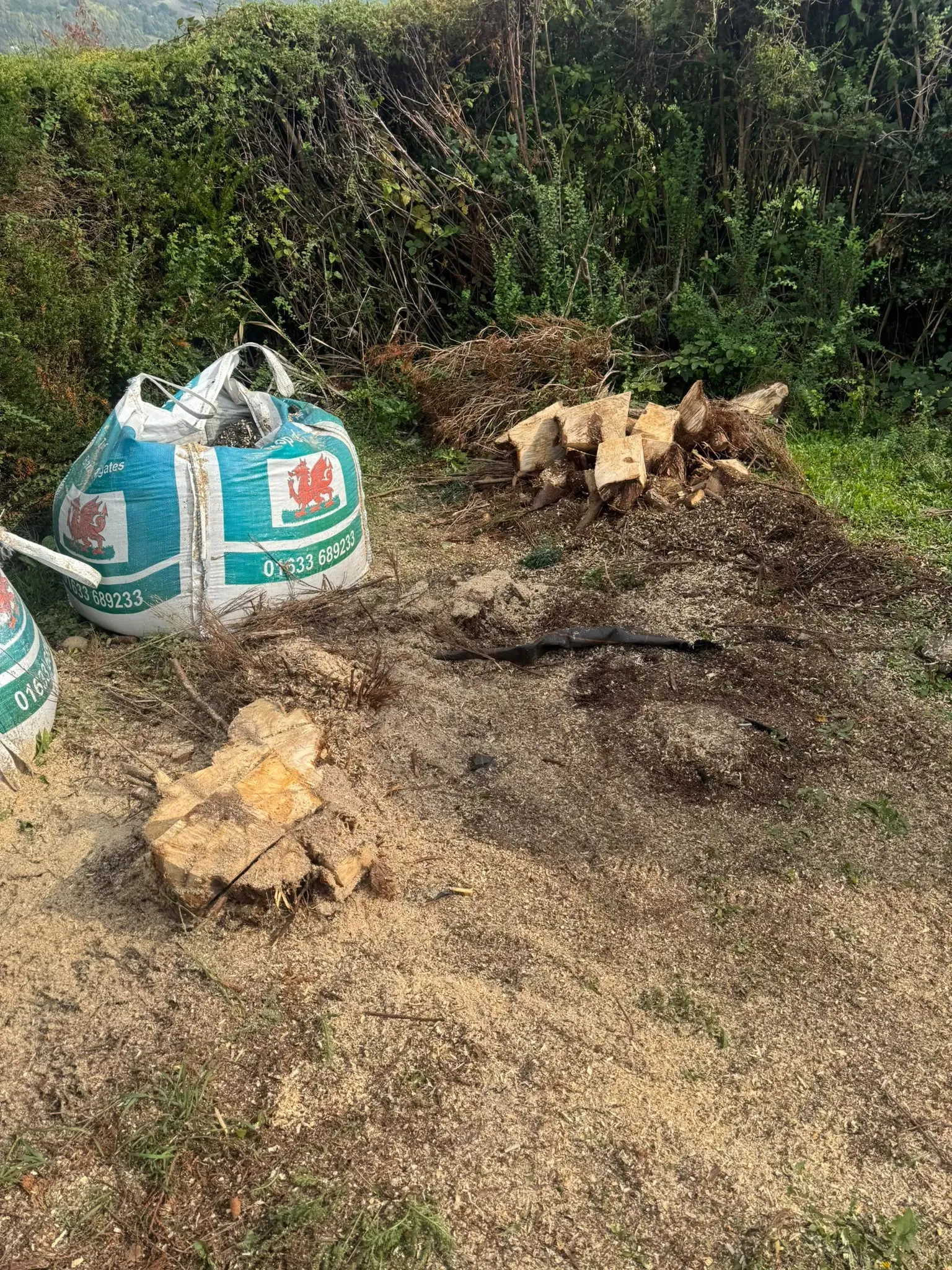
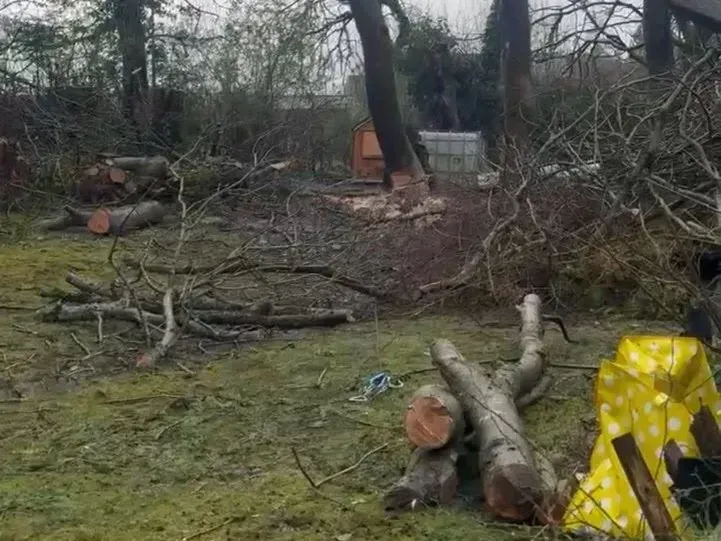
A freshly felled tree stump in a Pontypool garden prepared for mechanical stump grinding to prevent root regrowth and fungal decay.
The Myth of "Letting Nature Take Its Course"
When homeowners in Pontypool, Newport, or Abergavenny arrange to have an overgrown or storm-damaged tree felled, the immediate relief of having clear sky and safe boundary lines often puts the remaining stump at the bottom of the priority list. Many property owners assume a cut stump is completely dead and will quietly crumble into compost within a year or two.
In reality, a mature hardwood or conifer stump can take anywhere from 7 to 15 years to rot away naturally. Worse still, cutting down the canopy does not immediately kill an established root network. Stored carbohydrates inside the subterranean root plate continue to feed biological activity underground, while the exposed deadwood above ground invites pathogens that can devastate the rest of your garden.
4 Key Risks of Leaving a Felled Stump in the Ground
- 1 Honey Fungus (Armillaria): Fatal root rot that spreads underground to healthy hedges and shrubs.
- 2 Aggressive Sucker Regrowth: Willow, ash, and sycamore stumps sending up dense multi-stem shoots.
- 3 Lawn Hazards & Sinkholes: Hidden trip hazards, sheared mower blades, and collapsing turf as roots rot.
- 4 Pest Harbourage & Obstruction: Wood-boring beetles, wasps, rats, and blocked fence lines or patios.
1. Honey Fungus (Armillaria): The Silent Killer of Hedges & Shrubs
The single biggest biological threat posed by an old tree stump in South East Wales is honey fungus (Armillaria species). Our wet valley microclimate and heavy clay soils across Torfaen and Monmouthshire create the exact damp, low-oxygen conditions that fungal spores need to colonise dead timber.
Once airborne spores land on the exposed face of a freshly cut stump, the fungus feeds on the decaying wood and builds a massive energy reserve. From that base, it sends out tough, black, bootlace-like strands called rhizomorphs through the top 30 centimetres of soil. These strands can travel several metres a year in search of living roots.
How to Spot Honey Fungus & Vulnerable Plants
If honey fungus reaches your boundary hedges or ornamental borders, there is no chemical cure available in the UK. It attacks and kills the root systems of perennial plants, causing sudden dieback.
- Highly susceptible garden plants: Privet, leylandii and conifer hedges, laurel, roses, apple trees, cherry trees, birch, and willow.
- Warning signs on old stumps: Sheets of white, fan-shaped fungal mycelium growing beneath rotting bark (often smelling strongly of damp mushrooms), black "bootlace" cords in the soil, and clusters of honey-coloured toadstools appearing briefly in autumn.
- The only reliable prevention: Physically grinding out the dead stump and main root crown before Armillaria can use it as a food source.
2. Vigorous Sucker Regrowth from Willow, Ash & Sycamore
Many common native and garden trees found across Pontypool, Chepstow, and Caldicot have evolved a natural survival mechanism known as epicormic sprouting or coppicing. When the main trunk is felled, the sudden loss of the upper canopy triggers dormant buds around the root collar and along shallow lateral roots.
Instead of dying, the stump channels all of its stored energy into pushing up dozens of whip-like vertical shoots—known as water sprouts or root suckers. Within a single spring and summer growing season, an untended stump can turn into a dense, tangled thicket two metres tall.
Sycamore & Ash
Notorious across Welsh valley gardens for regenerating rapidly from cut stumps. Multi-stemmed regrowth has weak attachment points to the decaying parent stump, creating unstable timber over time.
Willow & Poplar
Send out suckers not just from the stump face, but from lateral roots several metres across your lawn. Left unchecked, these thirsty roots continue seeking out household drains and damp sub-bases.
Cherry, Plum & Laurel
Ornamental cherry trees and old laurel hedge bases frequently push up thorny or woody suckers through flowerbeds, gravel driveways, and gaps between paving slabs.
Continually cutting back suckers with secateurs or a strimmer only stimulates thicker regrowth next season, while over-the-counter stump killers often fail on wide, established root plates.
Mechanical Stump Grinding in Action
Rather than digging up your entire garden with a heavy excavator, we use narrow-access commercial stump grinders with tungsten-carbide teeth to shred the timber trunk and root flare well below turf level.
See How Our Stump Grinding Works →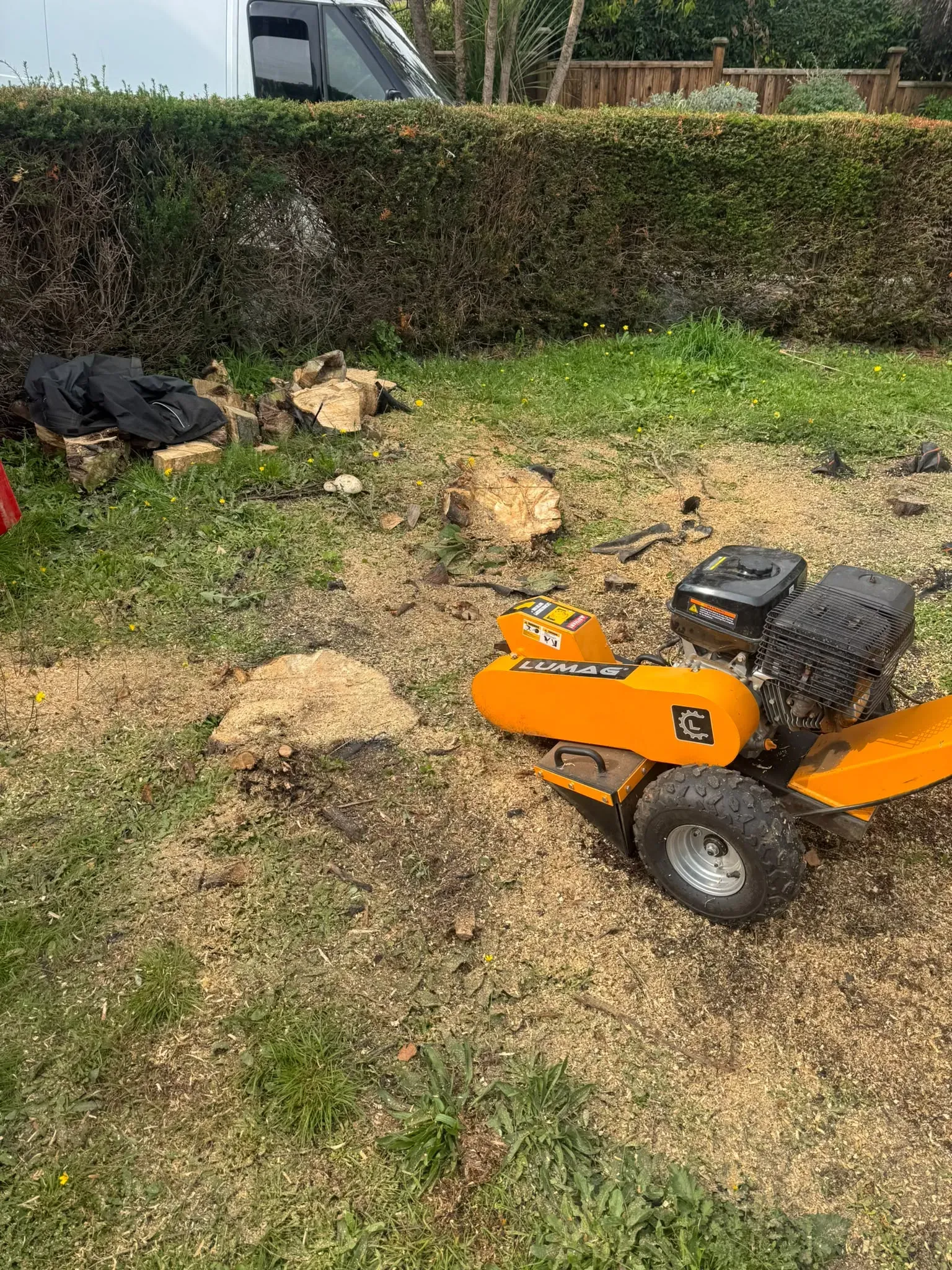
3. Trip Hazards, Mower Damage & Lawn Subsidence
Even when a tree stump is cut as flush to the ground as safely possible with a chainsaw, the flared root buttresses and surface roots remain proud of the surrounding soil. As grass grows up around the base in spring, a low stump becomes practically invisible.
- • Family & Visitor Safety: Concealed stumps and thick surface roots are a major trip hazard for children playing in the garden, elderly relatives, or anyone carrying tools across the lawn. For landlords managing rental properties in Newport or Torfaen, leaving dangerous trip hazards in communal or tenanted gardens creates avoidable liability.
- • Bent Lawnmower Crankshafts: Catching a rotary mower blade on a solid oak, ash, or conifer root flare doesn't just chip the blade—the sudden impact frequently bends the mower's engine crankshaft, writing off the machine immediately.
- • Delayed Lawn Sinkholes: If you leave a large stump to rot over a decade, the underground timber volume eventually collapses. Because Pontypool and Gwent gardens experience high annual rainfall, soil washes into the void left by the decaying stump, creating an uneven, waterlogged crater in the middle of your lawn.
4. Pest Harbourage & Blocking Future Fencing or Patios
Soft, rotting timber provides shelter and nutrition for a wide variety of garden pests. As the heartwood of an old stump softens, it attracts wood-boring beetles, carpenter ants, and huge colonies of red and black garden ants that undermine adjacent paving slabs. Hollowed-out cavities underneath old root plates are also prime nesting spots for underground wasp nests and rats, particularly when located near compost heaps, sheds, or boundary walls.
Beyond pests, an old stump severely limits how you can use or improve your outdoor space:
Boundary Fencing Obstructions
You cannot dig a deep, storm-resistant post hole for DuraPost steel fencing or featheredge panels if a massive timber root ball is sitting directly on the boundary line.
Patio Sub-Base Settlement
Laying a new sandstone or porcelain patio over decaying tree roots guarantees that the sub-base will sink and crack the mortar joints as the wood rots beneath it.
DIY Removal Methods vs Professional Stump Grinding
Homeowners often ask if they can remove a stump themselves over a weekend with a mattock, hire a small machine, or drill holes and pour in Epsom salts or herbicide. Here is how those options compare in practice across stony South Wales ground:
| Removal Method | Effectiveness | Drawbacks in Welsh Gardens |
|---|---|---|
| Hand Digging (Mattock & Axe) | Only viable for small shrub stems under 10cm diameter. | Back-breaking work in heavy Torfaen clay and stone; high risk of striking buried utilities. |
| Chemical Plugs / Salts / Burning | Very slow; rarely penetrates deep heartwood. | Still leaves the physical wooden stump in place for years; burning is unsafe near fences and dry hedges. |
| Commercial Stump Grinding | Immediate & Complete (60–120 mins per stump). | Grinds 150mm–300mm below ground level with protective debris screens; ready for turfing, planting, or fencing immediately. |
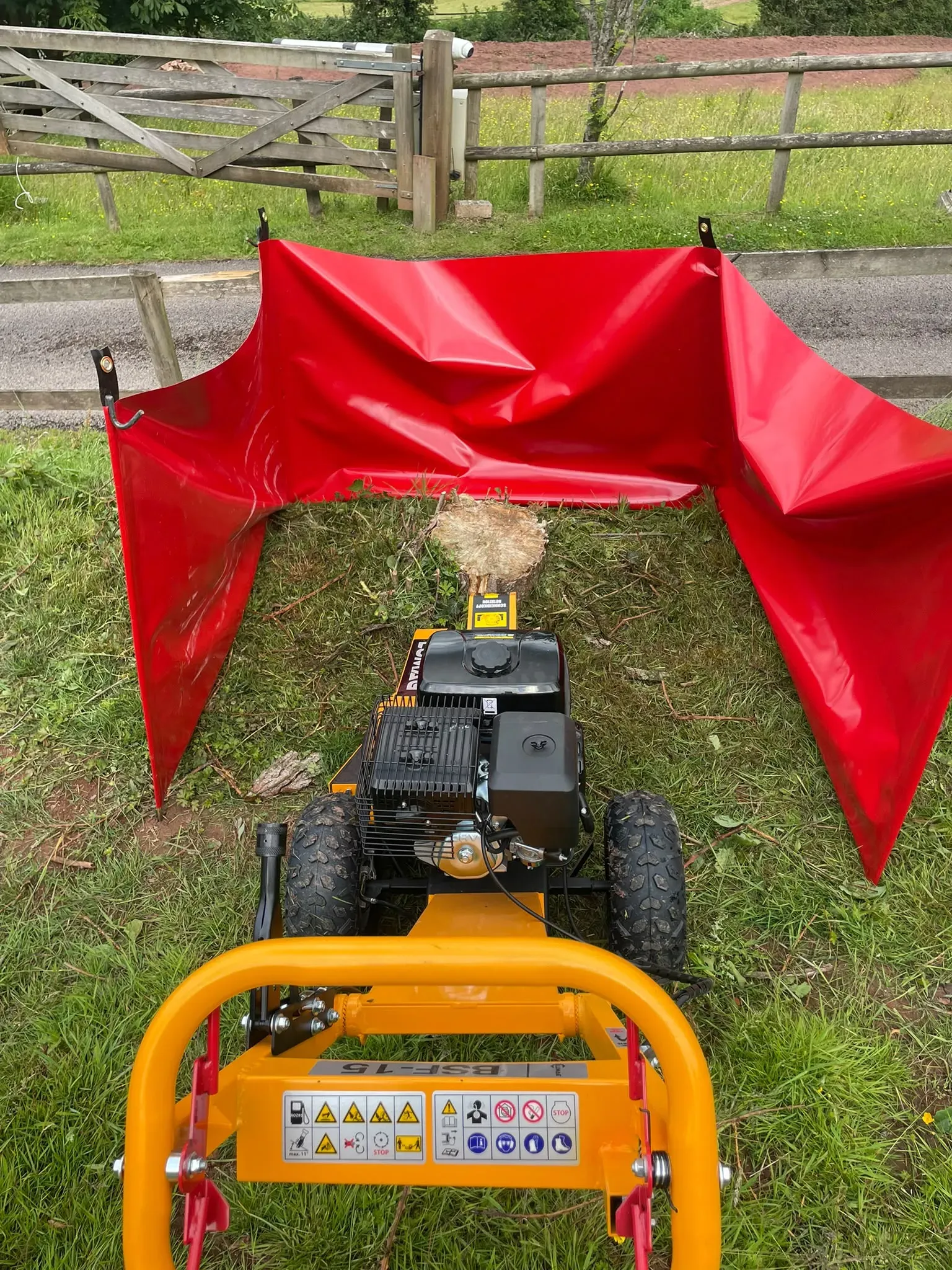
Heavy-duty petrol stump grinder set up with protective screens to shield nearby windows and patios from flying wood chips.
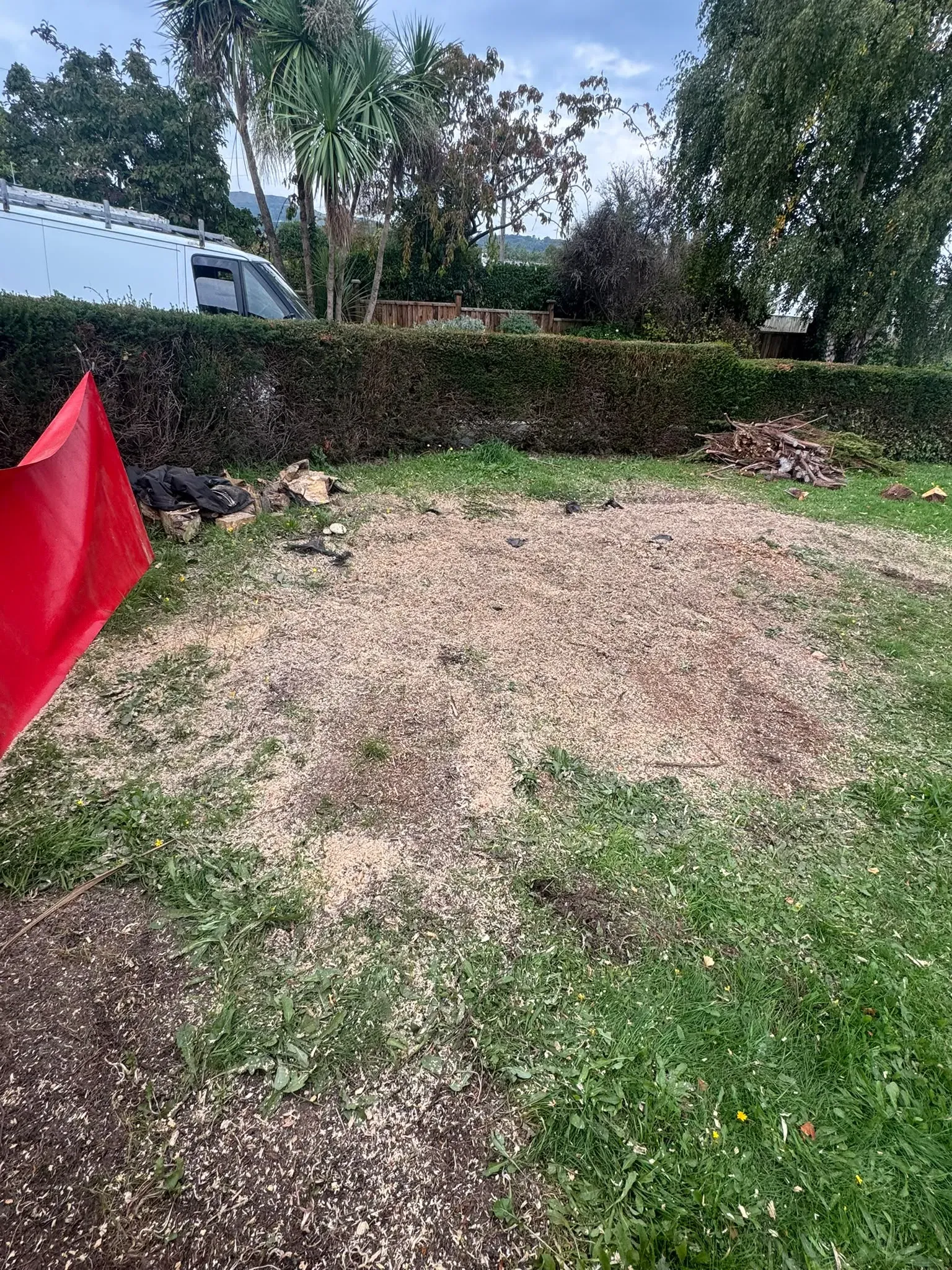
Once ground down below turf level, the hole is backfilled with nutrient-rich wood chippings and soil or cleared via our licensed waste service.
Frequently Asked Questions About Old Tree Stumps
How deep do you grind tree stumps below ground level?
Standard stump grinding removes the main timber trunk and root crown down to between 150mm and 300mm (6 to 12 inches) beneath turf level. This completely disconnects the lateral roots so they cannot resprout, and gives you plenty of depth to backfill with topsoil and lay fresh turf, replant, or install fence posts.
What happens to the roots left in the ground after stump grinding?
Once the central stump crown is ground out, the disconnected lateral roots have no access to sunlight or energy from the main stem. They will remain inert and break down naturally in the soil without sending up suckers or causing structural movement.
Can you get a stump grinder into a sloped or narrow Pontypool back garden?
Yes. Many hillside terrace gardens in Pontypool, Blaenavon borders, and Abergavenny have tight side-gate access or stepped tiers. Our portable pedestrian stump grinders are designed to pass through standard garden side gates and operate safely on sloped valley plots.
What do you do with the wood chippings and grindings?
Grinding a stump produces a mixture of shredded wood and soil. We use this mulch to backfill and compact the excavated hole so you aren't left with a dangerous pit. Any surplus grindings can be spread as weed-suppressing bark mulch on your borders or legally removed under our Full Waste Carrier Licence via our garden clearance service.
Related Services & Guides
Stump Removal in Pont-Y-Pŵl / Pontypool
Expert stump removal in Pontypool and South East Wales. We grind stumps below ground level to clear your site safely. Call us on 01633 603306.
TPO and Conservation Area Tree Rules in South Wales
Learn the rules for Tree Preservation Orders (TPOs) and Conservation Areas across Torfaen, Monmouthshire, and Newport before pruning or felling trees.
Spotting Ash Dieback & Fungal Decay in Garden Trees
Identify early signs of ash dieback, honey fungus, and basal rot in garden trees across Pontypool, Newport, and Monmouthshire before limbs fail.
DIY Stump Digging & Eco-Plugs vs Mechanical Removal
Compare manual digging, chemical eco-plugs, and mechanical stump grinding in Pontypool. Call JDP Outdoor Solutions on 01633 603306 for a free quote.
Birkdale DuraPost vs Concrete & Timber Fence Posts
Compare galvanised steel DuraPost with concrete and timber fence posts for South Wales gardens. Built for 110mph winds and wet soils. Call 01633 603306.
Who Owns the Hedge? Boundary Rules Before Removal
Who owns a boundary hedge? Learn how to check title deeds, planting lines, and High Hedges rules before removing hedges in Pontypool and South East Wales.
How to Stop Fence Panels Rattling & Bowing in the Wind
Stop fence panels rattling in slotted posts during high valley winds. Practical guide on wedges, clips, and heavy-duty panel upgrades in Pontypool.
Why Patios Sink: Sub-Bases & Full Mortar Beds Explained
Discover why spot-bedding fails in wet South Wales soils and how compacted MOT Type 1 sub-bases and full mortar beds prevent rocking slabs.
What Items Can Be Taken in a Garden & Rubbish Clearance?
Find out what our licensed rubbish clearance covers across Pontypool and Torfaen, from old fencing and sheds to banned hazardous items like asbestos.
How Hedge Thickness Filters Road Noise & Gusts
Learn how dense evergreen hedges filter valley gusts and road noise better than solid barriers. Expert hedge care across Pontypool and Torfaen.
Child-Safe Latches & Self-Closing Springs for Gates
Keep toddlers and dogs safe with heavy-duty self-closing hinges and magnetic gate latches. Installed across Pontypool and South East Wales.
Sizing a New Patio: Dining Sets, BBQs & Walkways
Calculate square metre footprints for dining sets, chair pull-out clearances, and door transitions with our Pontypool patio laying specialists.
Hiding Unsightly Drain Covers in New Garden Paving
Hide unsightly drain lids in your new garden patio. See how JDP Outdoor Solutions fits recessed infill trays in Pontypool, Newport, and Monmouthshire.
Managing Slurry & Drain Runoff During Driveway Washing
Prevent blocked gullies and mud runoff during driveway pressure washing in Pontypool. Practical advice on silt traps, sludge control, and soakaways.
How Commercial Chippers Reduce Branches by 80% Volume
See how commercial hydraulic wood chippers reduce bulky conifer brash and hawthorn by 80% in minutes. Licensed green waste clearance across Pontypool.
Canopy Shaping to Stop Solar Panel & Dish Shading
High tree canopies can cut solar panel output by 40%. Learn how targeted crown reduction in Pontypool restores sunlight and satellite line of sight.
Contemporary Slatted Panels vs Solid Lap: Light & Shade
Compare hit-and-miss slatted panels with solid waney lap fencing for light flow, privacy, and wind resistance across Pontypool and South East Wales.
Why Yew & Cherry Laurel Clippings Must Leave Site Fast
Wilted yew and crushed laurel clippings pose lethal toxin risks to pets and livestock. Book licensed green waste removal in Pontypool on 01633 603306.
What a Legal Waste Transfer Note Actually Looks Like
Learn what a legal Waste Transfer Note looks like, from EWC numbers to SIC codes. Licensed rubbish removal in Pontypool and South Wales. Call 01633 603306.
Checking Old Log Piles & Compost Heaps for Slow Worms
How we safely dismantle old compost bays, sleepers, and log piles in Pontypool to protect slow worms and amphibians during licensed garden clearances.
From Your First Call to a Clear Site
JDP Outdoor Solutions is run by Jac Price from Pontnewynydd, Pontypool. Jac is registered with Natural Resources Wales as an upper-tier waste carrier (CBDU035917). Based at Pontnewynydd, Pontypool NP4 6PR.
Rated 5.0 from 6 Google reviews.Read them on Google
Recent Jobs, in Our Customers' Words
13 tall pine trees felled, stumps ground and a new fence fitted
“Jac and his team were very accommodating with dates and timing. They cut down 13 old tall pine trees, removed and ground the stumps. They completed the fence work in the specified time and left after thoroughly cleaning up the work area.
We are very pleased with the new fence.
Thank you Jac. MB.”
Hedges cut back and the garden tidied
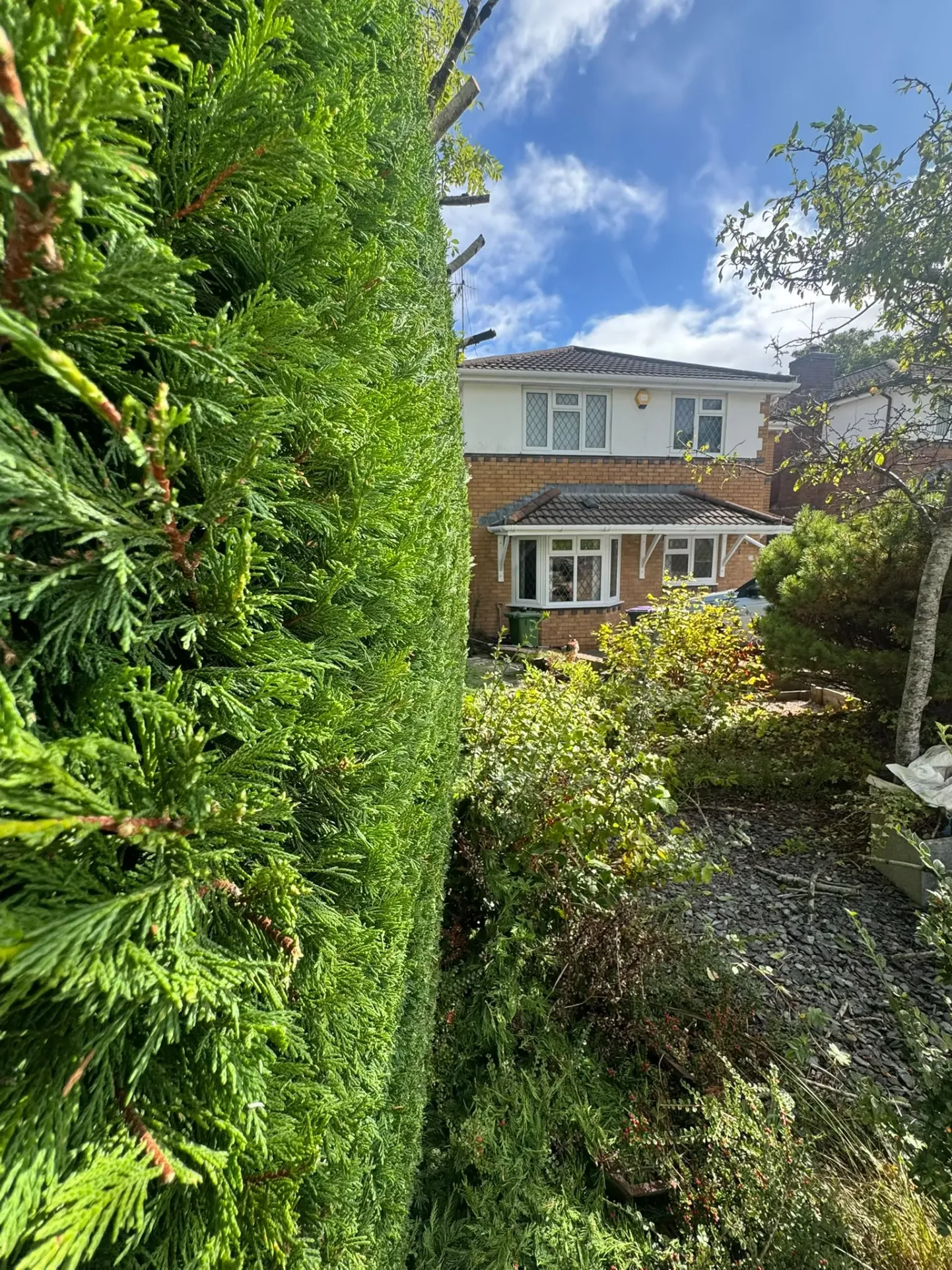
“Had J.D.P Outdoor Solutions in to cut back our hedges and tidy up the garden. They did a brilliant job and made a huge difference to the whole area. Friendly, reliable and very tidy workers. Would definitely use them again.”
-
01
Call or Ask for a Visit
Call 01633 603306, 7am to 7pm, seven days a week, or request a quote online, and we arrange a time to look at the job.
-
02
Checks and a Clear Price
We look at the job on site and give you a clear price before any work starts. For trees, we check for a Tree Preservation Order or conservation area first. If council consent is needed, you know before the job is booked.
-
03
Careful Work on the Day
In tight gardens, trees come down in sections on rigging to protect your property. Heavy hedge cutting is planned around the bird nesting season, in line with the Wildlife and Countryside Act.
-
04
A Clear Site
Stumps can be ground below lawn level. Branches, old fencing and garden waste are taken away under our waste carrier registration to licensed South Wales transfer and recycling depots, never left in a lay-by.
Reclaim Your Garden Space Safely Today
Whether you have a single awkward tree stump blocking a new fence line in Pontypool or multiple felled conifer bases needing clearance in Newport, Chepstow, or Abergavenny, we have the machinery to clear the ground cleanly.