Boundary Rules, Ownership & Neighbour Laws for Removing Hedges in Pontypool & South Wales
Before uprooting an overgrown conifer screen or replacing an old privet hedge with new fencing, establishing legal ownership is vital. Here is our practical contractor’s guide to stem lines, title deeds, High Hedges notices, and boundary etiquette across Torfaen, Monmouthshire, and Newport.
Key Takeaways Before You Uproot a Boundary Hedge
- 01. The Stem Line Rule: Legal ownership of a hedge is determined by where the main trunks or stems emerge from the soil, not how far the branches overhang into either garden.
- 02. The Party Wall Act Myth: In England and Wales, the Party Wall etc. Act 1996 applies to masonry walls and buildings—it does not cover living hedges, trees, or timber fences.
- 03. Shared Party Hedges: If trunks grow directly along the legal boundary line, or if a historic hedge separates two properties with unclear deeds, you must get written consent from your neighbour before removing it.
- 04. Wildlife Law Applies: Under the Wildlife and Countryside Act 1981, it is an offence to uproot or destroy any hedge containing an active bird nest, particularly between March and August.
1. Who Actually Owns the Hedge? Planting Lines vs Title Deeds
Across South East Wales—from steep tiered valley terraces in Pontypool and Blaenavon to older stone-walled plots in Abergavenny and Chepstow—garden boundaries have often shifted slightly over decades of planting and landscaping. When a conifer or laurel hedge grows two metres wide, it is easy to lose sight of the true property line.
Before booking professional hedge removal or ordering replacement fencing materials, you must establish whether the hedge is solely yours, solely your neighbour’s, or a shared boundary feature.
Inspecting the Stem Line
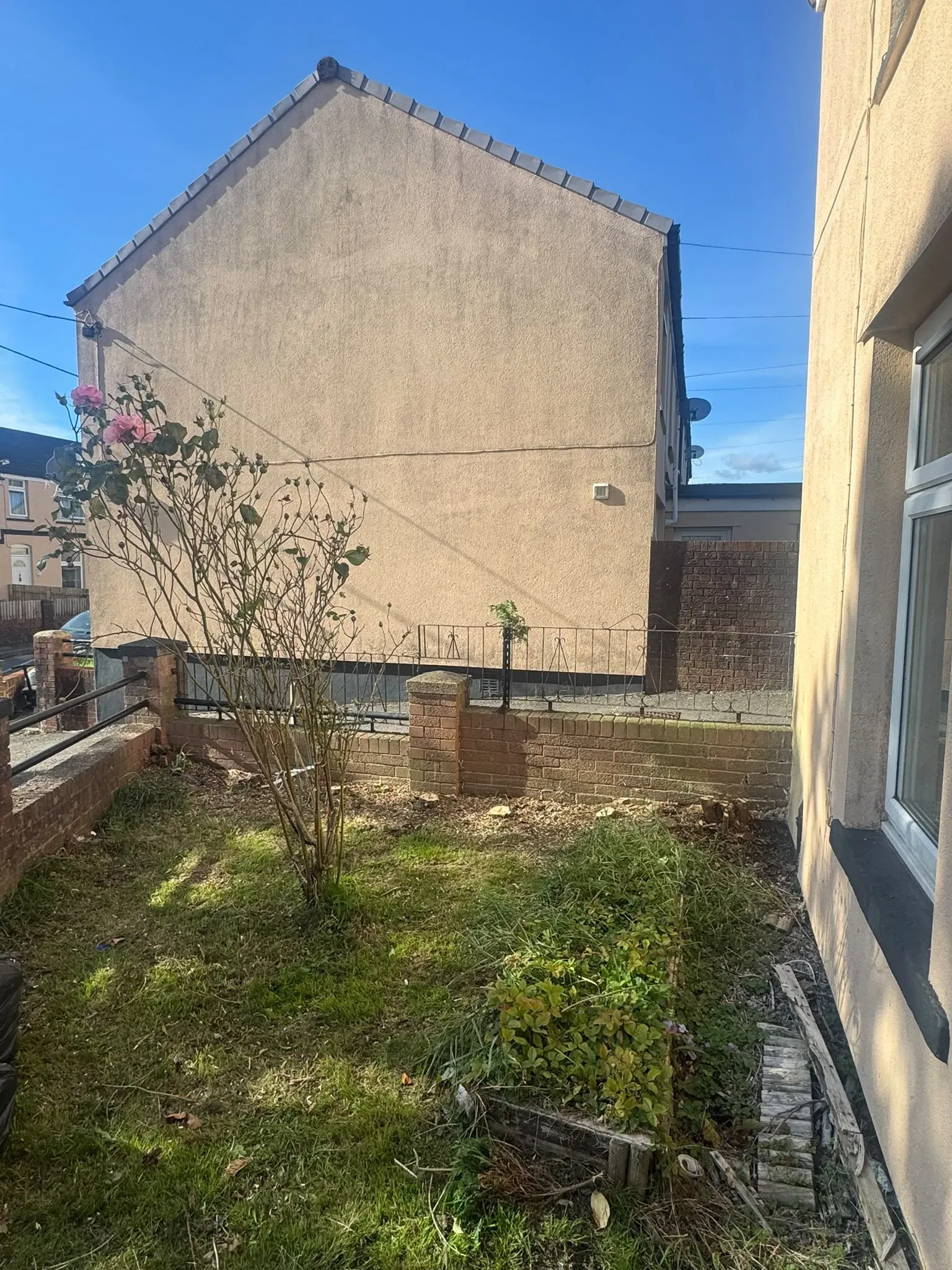
Push back the lower foliage and look closely at the base of the hedge where the main stems enter the earth. If the trunks are planted entirely on your side of the original boundary line (often marked by old concrete pin kerbs, stone wall footings, or historic post stumps), the hedge belongs to you. You have the right to remove it without neighbour permission, though polite notice is always best practice.
Checking Land Registry Deeds
HM Land Registry title plans follow the "General Boundaries Rule", showing only the approximate line in red. However, your Title Register or historic Conveyance Deeds may include ‘T’ marks. An inward-facing ‘T’ on your side of the boundary indicates a legal duty to maintain that boundary feature. An ‘H’ mark (two ‘T’s joined together) denotes a shared party boundary.
2. Does the Party Wall Act Apply to Removing Hedges?
Homeowners frequently ask whether they need a formal Party Wall Agreement before excavating hedge roots along a shared border. In short: no, not for the hedge itself.
The Party Wall etc. Act 1996 strictly governs masonry party walls, party fence walls (such as a brick or stone wall straddling the boundary line), and excavations near neighbouring building foundations. Living barriers—such as Leylandii, privet, hawthorn, or laurel hedges—and wooden garden fences are excluded from the Act.
Important Exception: Root Systems Near Walls & Outbuildings
While the hedge itself isn't covered by the Party Wall Act, mechanical excavation or winching out massive root balls right next to a neighbour’s garage foundation, conservatory, or stone retaining wall carries a legal duty of care. On cramped valley plots or historic gardens in Abergavenny and Chepstow, we strongly recommend precision stump grinding rather than brute-force pulling with an excavator, which could destabilise neighbouring masonry or shared retaining walls.
3. Neighbour’s Hedge vs Shared Hedge: What Can You Legally Cut?
What happens if the hedge stems are clearly on your neighbour’s land, or straddling the middle of the boundary, and you want to reclaim garden space or install a new fence?
| Hedge Position | Your Legal Rights | Recommended Action |
|---|---|---|
| Planted Entirely on Your Land | You own the hedge outright. You can trim, reduce, or completely uproot it at any time (subject to TPO/Conservation Area and bird nesting laws). | Speak to your neighbour out of courtesy before removing a privacy screen, then replace with DuraPost steel-post fencing or timber panels along your line. |
| Straddling the Boundary Line ("Party Hedge") | Jointly owned by both properties. Neither homeowner can uproot, destroy, or severely reduce the height without the other’s permission. | Agree a plan in writing with your neighbour. Many neighbours willingly split the cost of hedge removal and a new featheredge boundary fence to gain extra garden width. |
| Planted on Neighbour’s Land (Overhanging Yours) | You can cut branches and roots back to the boundary line, provided doing so does not kill or destabilise the hedge. Cuttings legally remain your neighbour’s property (offer them back; do not throw them over). | Trim back to the boundary via professional hedge trimming, and install your new fence posts just inside your own boundary line. |
4. High Hedges Disputes & Council Rules in Torfaen, Monmouthshire & Newport
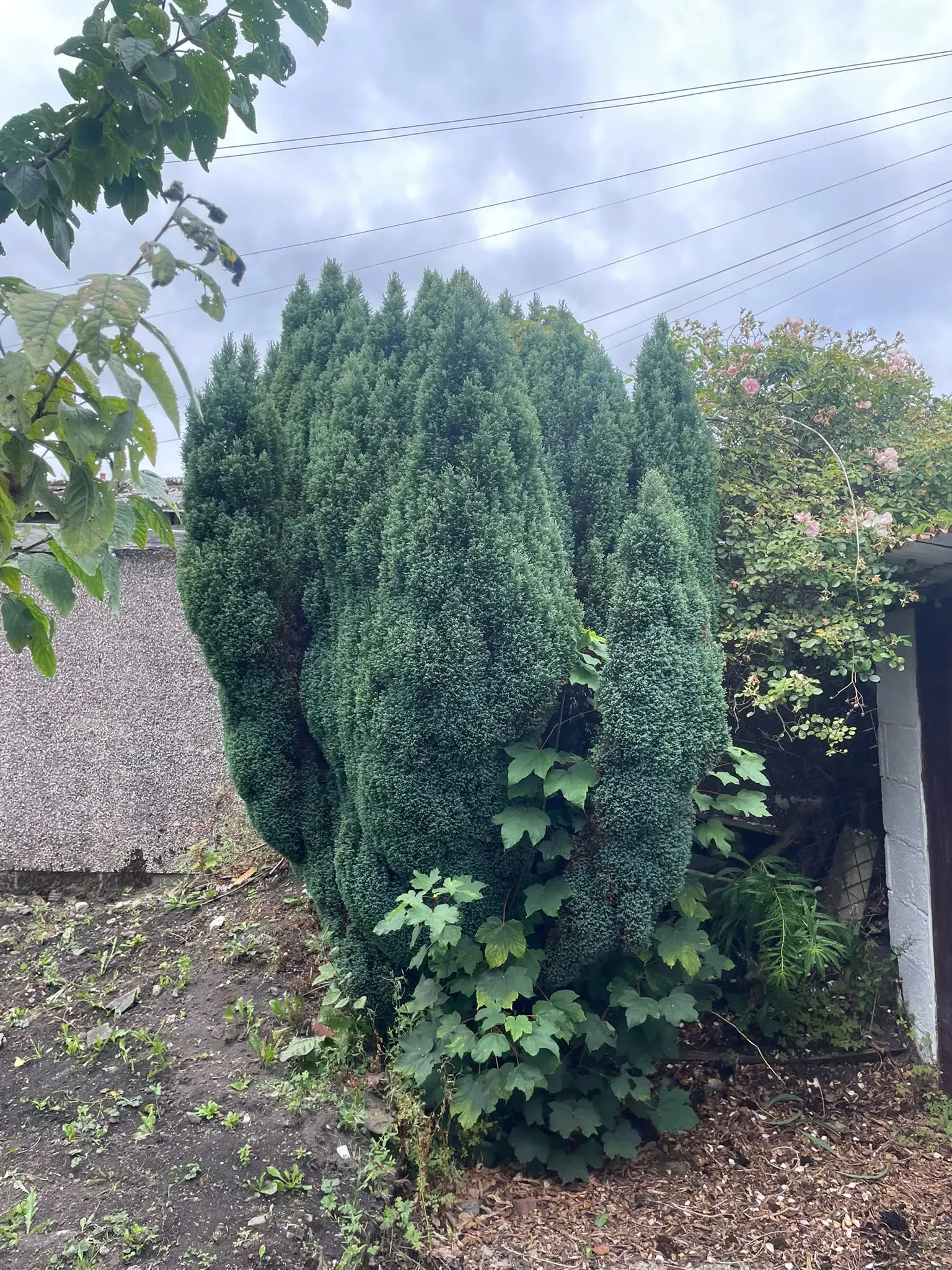
Fast-growing conifers—especially Leylandii and Western Red Cedar—can quickly reach 4 to 6 metres in height, blocking winter sunlight across steep valley gardens in Pontypool or suburban estates in Newport and Caldicot.
When neighbourly discussions break down over an overgrown evergreen screen, complaints are handled under Part 8 of the Anti-social Behaviour Act 2003. Local authorities—including Torfaen County Borough Council, Monmouthshire County Council, and Newport City Council—have the legal power to investigate and issue a formal Remedial Notice if a hedge meets all of the following criteria:
- The hedge consists of a line of two or more trees or shrubs.
- It is predominantly evergreen or semi-evergreen (deciduous beech or hawthorn hedges that lose their leaves in winter usually do not qualify).
- It exceeds 2 metres (approx. 6ft 6in) in height above ground level.
- It acts as a barrier to light or access, adversely affecting the reasonable enjoyment of a neighbouring domestic property.
Note for Homeowners Receiving a Notice: A council Remedial Notice can legally require you to reduce the hedge to a specified height and maintain it there, though councils cannot legally force you to uproot the hedge completely if doing so would kill it. However, because cutting old, woody Leylandii hard back often leaves permanent brown dead-zones, many South Wales homeowners choose full hedge removal and fence replacement as a cleaner, permanent resolution.
5. Conservation Areas, Rural Hedgerows & Bird Nesting Laws
Even when you own a hedge outright and your neighbour agrees to its removal, three environmental and planning rules across South East Wales must be checked before starting chainsaw work:
1. Bird Nesting Season (March to August)
Under the Wildlife and Countryside Act 1981, it is a criminal offence to intentionally damage or destroy an active bird nest, eggs, or dependent young. Dense garden hedges are prime nesting habitats from March through August. If you need a hedge removed during spring or summer, our team carries out a thorough pre-work canopy and stem inspection. If active nests are present, work must be delayed until the chicks have fledged.
2. Conservation Areas & Tree Preservation Orders (TPOs)
Domestic garden hedges do not usually carry a TPO. However, if an old boundary hedge contains individual matured trees (or overgrown trees once planted as a hedge) with a trunk diameter exceeding 75mm at 1.5 metres above ground inside a designated Conservation Area—such as parts of Abergavenny, Chepstow town centre, or the Pontypool Park environs—you must give your local council six weeks’ written notice (a Section 211 notice) before felling.
3. The Hedgerows Regulations 1997 (Rural Land Borders)
Standard domestic garden hedges enclosing a curtilage are exempt from the Hedgerows Regulations 1997. However, if your property in Monmouthshire or rural Torfaen borders agricultural land, common land, or a protected nature reserve, removing a countryside hedgerow over 20 metres long requires prior consent from the local planning authority.
6. Practical Step-by-Step: Agreeing the Line & Installing New Fencing
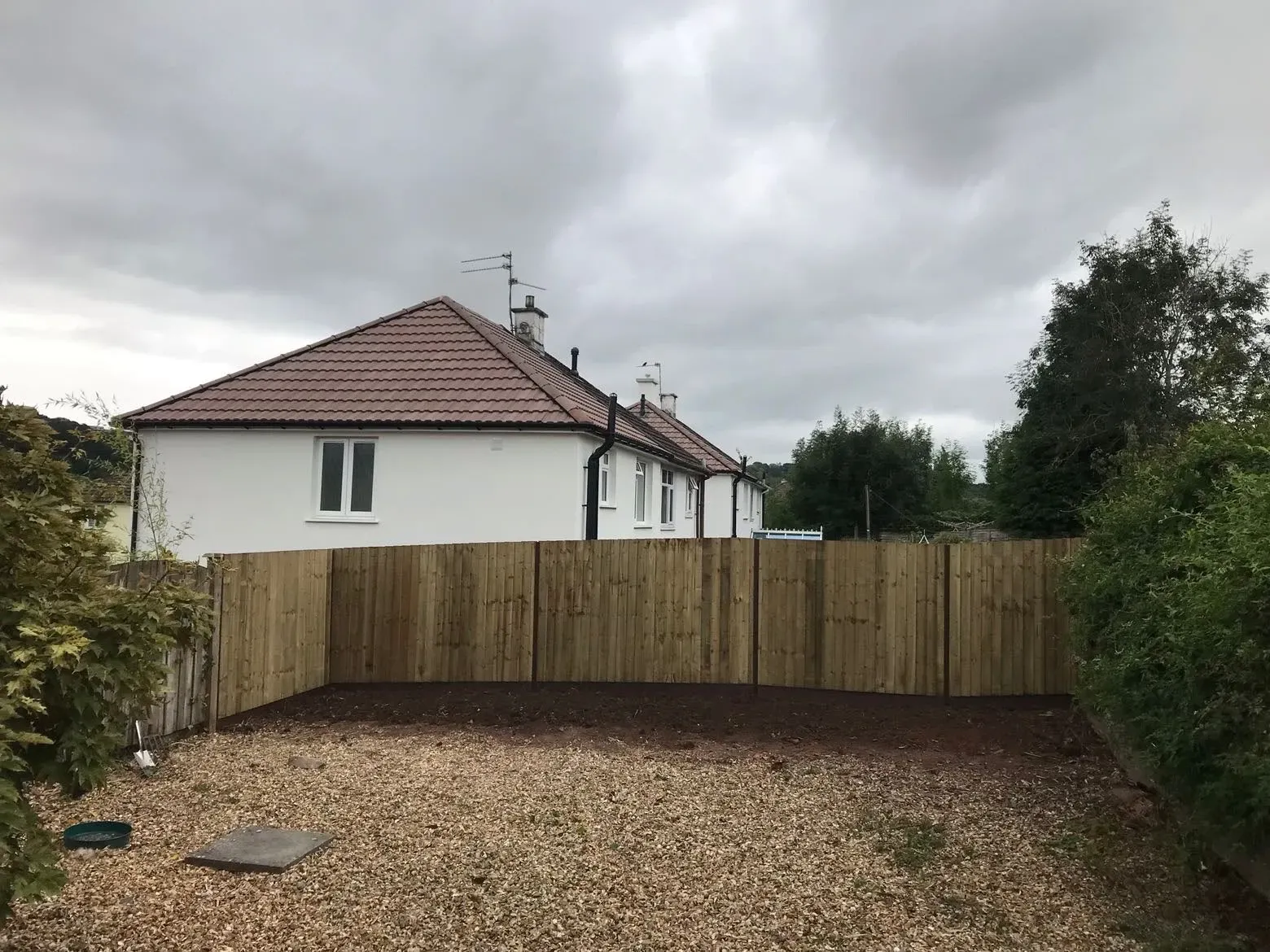
Once ownership and neighbour permissions are clear, uprooting a mature hedge and fitting a storm-proof fence in its place requires proper groundwork. When a wide conifer hedge is removed, it often reveals uneven soil levels, dry depleted earth, and thick lateral roots running directly along the line where new fence posts need to sit.
- Walk the Line Together & String It Out: Before we cut a single branch, we recommend walking the boundary with your neighbour. Once the foliage and stems are cleared to ground level, running a taut string line between fixed boundary markers (such as the rear house wall division and the bottom corner post) removes all guesswork.
- Grind Out the Root Line: Simply cutting hedge stumps flush to the soil makes digging fence post holes at 1.8m or 2.4m centres virtually impossible. We use high-powered commercial stump grinders to shred the root plates below ground level, clearing a clean trench for your new fence line.
- Licensed Green Waste Disposal: Uprooting a 15-metre conifer hedge generates tonnes of green waste and root mulch. Under Natural Resources Wales (NRW) Duty of Care rules, you are legally responsible for who takes your waste. JDP Outdoor Solutions holds a Full Waste Carrier Licence, ensuring all green waste removal is processed through authorised South Wales transfer stations.
- Choose Wind-Resistant Posts for Newly Exposed Soil: Soil where hedge roots have just been ground out is looser than undisturbed ground, and Welsh valley hillsides experience severe wind funnelling. As a Birkdale DuraPost Trusted Installer, we recommend cold-rolled galvanised steel DuraPost systems set deep in concrete footings—giving you a rot-proof boundary tested to withstand winds up to 110mph.
Frequently Asked Questions: Hedge Removal & Boundaries
Can I remove a hedge if my neighbour objects?
If the main stems of the hedge grow entirely on your side of the legal boundary line, and the deeds do not contain a specific covenant requiring you to maintain a living hedge, you are legally entitled to remove it even if your neighbour prefers the greenery. However, if the trunks grow on the boundary line itself, it is a shared party hedge and cannot be removed without your neighbour’s consent.
How high can a replacement fence be after removing a hedge?
Under UK Permitted Development rights across Torfaen, Monmouthshire, and Newport, a rear or side garden boundary fence can be erected up to 2 metres (approx. 6ft 6in) high (including any gravel board or trellis topper) without planning permission. If the boundary fronts a highway, road, or public footpath used by vehicles, the maximum permitted height without planning consent is 1 metre.
Can you put a new fence in the exact spot where a hedge was removed?
Yes, provided the stumps and main structural roots are ground out or excavated first. Trying to dig post holes between left-behind conifer stumps results in misaligned bays and shallow, unstable post footings. We handle the complete package—from chainsawing the hedge and stump removal to installing your new boundary fencing along the true line.
Which way should the "good side" of a new fence face?
There is no law forcing you to face the smooth side of a fence towards your neighbour’s garden. Traditionally, the posts and rails sit on the owner’s side so the structural fixings remain accessible on your land, though many homeowners choose double-sided panels or sleek DuraPost steel posts where both sides look clean and tidy. The golden rule is ensuring that no part of the posts, panels, or concrete footings trespasses across the boundary line unless agreed with your neighbour.
Related Services & Guides
Hedge Removal in Pont-Y-Pŵl / Pontypool
Hedge removal in Pontypool and South Wales, including root grubbing and clearance. Free site visits and written quotes. Call 01633 603306.
TPO and Conservation Area Tree Rules in South Wales
Learn the rules for Tree Preservation Orders (TPOs) and Conservation Areas across Torfaen, Monmouthshire, and Newport before pruning or felling trees.
Spotting Ash Dieback & Fungal Decay in Garden Trees
Identify early signs of ash dieback, honey fungus, and basal rot in garden trees across Pontypool, Newport, and Monmouthshire before limbs fail.
Why Leaving Old Tree Stumps Can Harm Your Garden
Leaving felled tree stumps to rot invites honey fungus, pests, and root regrowth. Discover why stump grinding in Pontypool protects your garden.
DIY Stump Digging & Eco-Plugs vs Mechanical Removal
Compare manual digging, chemical eco-plugs, and mechanical stump grinding in Pontypool. Call JDP Outdoor Solutions on 01633 603306 for a free quote.
Birkdale DuraPost vs Concrete & Timber Fence Posts
Compare galvanised steel DuraPost with concrete and timber fence posts for South Wales gardens. Built for 110mph winds and wet soils. Call 01633 603306.
How to Stop Fence Panels Rattling & Bowing in the Wind
Stop fence panels rattling in slotted posts during high valley winds. Practical guide on wedges, clips, and heavy-duty panel upgrades in Pontypool.
Why Patios Sink: Sub-Bases & Full Mortar Beds Explained
Discover why spot-bedding fails in wet South Wales soils and how compacted MOT Type 1 sub-bases and full mortar beds prevent rocking slabs.
What Items Can Be Taken in a Garden & Rubbish Clearance?
Find out what our licensed rubbish clearance covers across Pontypool and Torfaen, from old fencing and sheds to banned hazardous items like asbestos.
How Hedge Thickness Filters Road Noise & Gusts
Learn how dense evergreen hedges filter valley gusts and road noise better than solid barriers. Expert hedge care across Pontypool and Torfaen.
Child-Safe Latches & Self-Closing Springs for Gates
Keep toddlers and dogs safe with heavy-duty self-closing hinges and magnetic gate latches. Installed across Pontypool and South East Wales.
Sizing a New Patio: Dining Sets, BBQs & Walkways
Calculate square metre footprints for dining sets, chair pull-out clearances, and door transitions with our Pontypool patio laying specialists.
Hiding Unsightly Drain Covers in New Garden Paving
Hide unsightly drain lids in your new garden patio. See how JDP Outdoor Solutions fits recessed infill trays in Pontypool, Newport, and Monmouthshire.
Managing Slurry & Drain Runoff During Driveway Washing
Prevent blocked gullies and mud runoff during driveway pressure washing in Pontypool. Practical advice on silt traps, sludge control, and soakaways.
How Commercial Chippers Reduce Branches by 80% Volume
See how commercial hydraulic wood chippers reduce bulky conifer brash and hawthorn by 80% in minutes. Licensed green waste clearance across Pontypool.
Canopy Shaping to Stop Solar Panel & Dish Shading
High tree canopies can cut solar panel output by 40%. Learn how targeted crown reduction in Pontypool restores sunlight and satellite line of sight.
Contemporary Slatted Panels vs Solid Lap: Light & Shade
Compare hit-and-miss slatted panels with solid waney lap fencing for light flow, privacy, and wind resistance across Pontypool and South East Wales.
Why Yew & Cherry Laurel Clippings Must Leave Site Fast
Wilted yew and crushed laurel clippings pose lethal toxin risks to pets and livestock. Book licensed green waste removal in Pontypool on 01633 603306.
What a Legal Waste Transfer Note Actually Looks Like
Learn what a legal Waste Transfer Note looks like, from EWC numbers to SIC codes. Licensed rubbish removal in Pontypool and South Wales. Call 01633 603306.
Checking Old Log Piles & Compost Heaps for Slow Worms
How we safely dismantle old compost bays, sleepers, and log piles in Pontypool to protect slow worms and amphibians during licensed garden clearances.
From Your First Call to a Clear Site
JDP Outdoor Solutions is run by Jac Price from Pontnewynydd, Pontypool. Jac is registered with Natural Resources Wales as an upper-tier waste carrier (CBDU035917). Based at Pontnewynydd, Pontypool NP4 6PR.
Rated 5.0 from 6 Google reviews.Read them on Google
Recent Jobs, in Our Customers' Words
13 tall pine trees felled, stumps ground and a new fence fitted
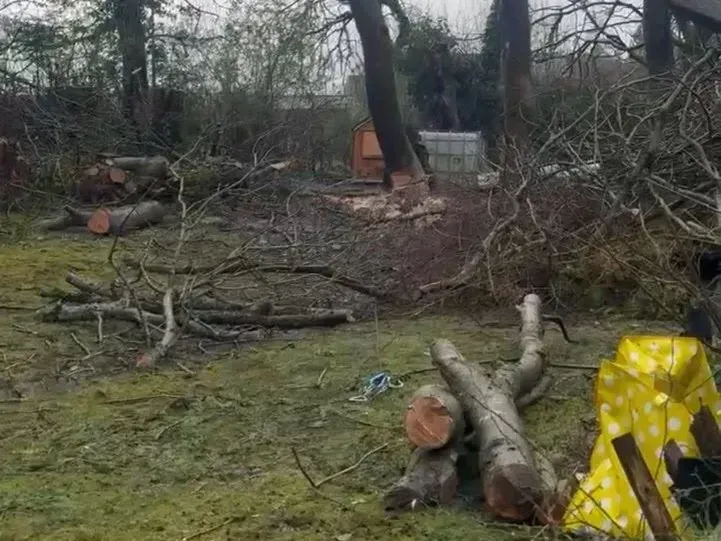
“Jac and his team were very accommodating with dates and timing. They cut down 13 old tall pine trees, removed and ground the stumps. They completed the fence work in the specified time and left after thoroughly cleaning up the work area.
We are very pleased with the new fence.
Thank you Jac. MB.”
Hedges cut back and the garden tidied
“Had J.D.P Outdoor Solutions in to cut back our hedges and tidy up the garden. They did a brilliant job and made a huge difference to the whole area. Friendly, reliable and very tidy workers. Would definitely use them again.”
-
01
Call or Ask for a Visit
Call 01633 603306, 7am to 7pm, seven days a week, or request a quote online, and we arrange a time to look at the job.
-
02
Checks and a Clear Price
We look at the job on site and give you a clear price before any work starts. For trees, we check for a Tree Preservation Order or conservation area first. If council consent is needed, you know before the job is booked.
-
03
Careful Work on the Day
In tight gardens, trees come down in sections on rigging to protect your property. Heavy hedge cutting is planned around the bird nesting season, in line with the Wildlife and Countryside Act.
-
04
A Clear Site
Stumps can be ground below lawn level. Branches, old fencing and garden waste are taken away under our waste carrier registration to licensed South Wales transfer and recycling depots, never left in a lay-by.
Biggest To Cope, Smallest To Care
Book a Free Boundary Hedge & Fencing Quote Today
Based in Pontypool, JDP Outdoor Solutions delivers professional hedge removal, stump grinding, DuraPost fencing, and licensed green waste clearance within a 15-mile radius across Torfaen, Monmouthshire, and Newport.