How to Stop Fence Panels Rattling & Bowing in Slotted Posts
Anyone living on a hillside in Pontypool, the Torfaen valleys, or exposed parts of Monmouthshire and Newport knows the sound of slotted fence panels banging through a winter gale. Left unchecked, persistent wind clatter wears away timber framing, fractures concrete grooves, and leads to blown-out bays. Here is our practical trade guide to silencing noisy panels and bracing bowing timber for good.
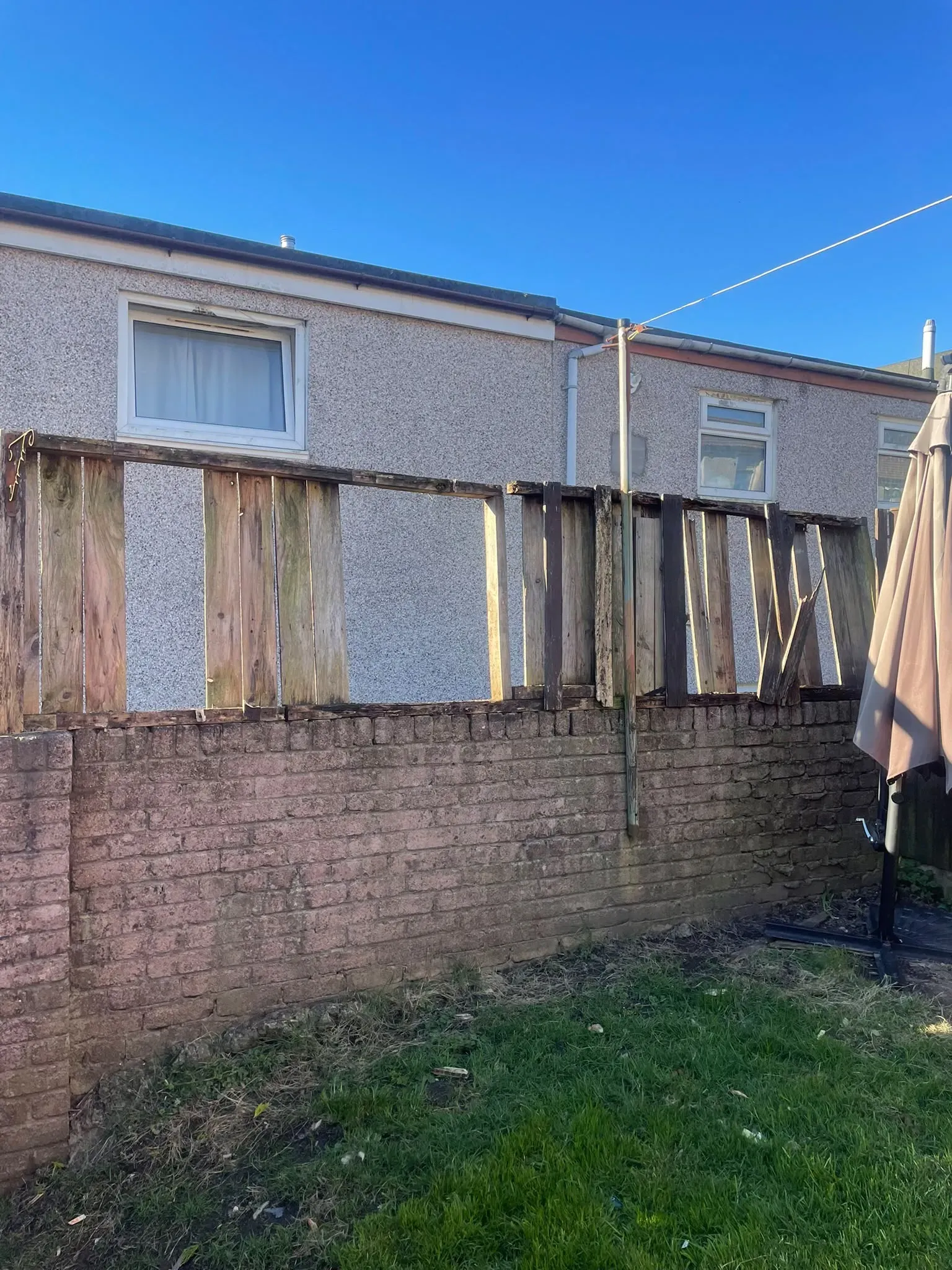
The end result of wind rattle: Once a panel starts flexing and hammering inside its post channels, the outer battens split and individual slats blow out.
Neoprene & Plastic Wedges
Best for taking up the 5mm–15mm slack inside slotted concrete or steel H-posts without drilling.
Stainless Panel Clips & Shims
Secures panels against vertical uplift and side-to-side play on windy valley boundaries.
Centre Bracing Battens
Stops wide 6ft (1.83m) panels bowing in the middle and pulling out of the post rebates.
Closeboard & DuraPost Bays
Replacing thin waney-lap panels with heavy-duty vertical featheredge panels built to handle severe gales.
Why Do Slotted Fence Panels Rattle and Bow in the First Place?
Slotted H-section fence posts—whether traditional precast concrete or modern cold-rolled steel—are designed with a deliberate tolerance gap. A standard concrete post groove typically measures around 50mm to 55mm wide, while a standard UK overlap or waney-lap timber fence panel has an outer framing thickness of roughly 32mm to 38mm.
That leaves up to 15mm–20mm of free play inside the slot. When the fence is brand new and damp from pressure treatment, it may sit reasonably still. However, across South East Wales—where wet valley weather alternates with drying winds—two things happen very quickly:
- Seasonal Timber Shrinkage: As softwood framing dries out in spring and summer, the panel shrinks both in thickness and overall width (often losing 10mm across a 1.83m span). It now sits loosely inside the H-post channels.
- Wind Load & Sail Effect: Solid fence panels act like a sail. When wind funnels up steep terraced gardens in Pontypool or across open plots in Caldicot and Chepstow, the centre of the panel bellies outward. As the middle bows, the vertical side edges draw inward—barely clinging to the post lips—and slam back and forth against the concrete with every gust.
- Mechanical Wear: That constant hammering isn't just an annoyance at 2am; it acts like a slide hammer. It pops the staples holding cheap lap slats together, wears away the vertical side battens, and can even crack the front cheek off older concrete posts.
3 Proven Ways to Stop Fence Panels Rattling in Slotted Posts
Before replacing any panels, check the posts themselves by giving them a firm push at shoulder height. If the concrete or timber post is rocking in the ground, wedging the panel won't solve the root problem—you will need fence post repairs first. If the posts are rock solid, use one of the three methods below to lock the panels tight.
1. Neoprene Rubber Wedges & EPDM Foam Strips (Best Non-Invasive Fix)
DIY Time: 5 Mins Per BayUnlike folded cardboard, bits of broken slate, or untreated offcuts of wood (which either rot, hold moisture against the panel frame, or drop out the first time the timber shrinks in July), high-density neoprene wedges or closed-cell EPDM rubber strips compress and expand with the timber.
- How to fit them: Push the fence panel firmly against the front lip of the concrete post slot (usually the tidy side facing your garden or street).
- Slide two neoprene wedges into the rear gap on the left post (one 300mm from the top, one 300mm from the bottom) and two on the right post.
- Tap them snug with a rubber mallet—do not hammer them with a steel claw hammer, as excessive force can crack the thin cheek of an aged concrete H-post.
- Because neoprene is weatherproof and compressible, it absorbs vibration and stops acoustic transfer into the concrete post.
2. Stainless Steel Anti-Rattle Panel Clips
DIY Time: 10 Mins Per BaySpring-loaded stainless steel fence clips (often shaped like a small 'S' or 'U' bracket with teeth) are pushed between the panel frame and the inside edge of the concrete slot.
- Why they work: The spring tension pushes the timber frame tight against the opposing face of the post groove, while small barbs grip the timber batten so the clip cannot slide down to the gravel board over time.
- Trade Tip: Always buy stainless steel or heavily galvanised clips. Cheap mild-steel clips rust through within two Welsh winters and leave ugly brown rust streaks running down light grey concrete posts.
- Fit four clips per 6ft high panel (two on each side). For shorter 3ft or 4ft panels, two clips on one side are usually enough to tension the bay.
3. Treated Timber Packing Shims & Panel Security Brackets
Best for Slightly Undersized PanelsIf your concrete posts were originally set slightly too far apart (for example, 1840mm instead of 1830mm), or if an older imperial panel has shrunk considerably, rubber wedges alone won't bridge the gap safely. Even worse, a strong gale can bow the panel just enough for one end to pop completely out of the post slot.
- How we solve it on site: Lift the panel out of the bay and screw a full-length pressure-treated UC3 timber packing strip (typically 12mm x 38mm or 19mm x 38mm) vertically along one side of the panel frame using exterior-grade stainless or green coated decking screws.
- This permanently widens the panel so it engages the full depth of both concrete post slots, eliminating both side-to-side rattle and the risk of the bay blowing out.
- To prevent vertical lifting in severe valley updraughts, fit an over-post security bracket at the top of the concrete post to trap the top capping rail in place.
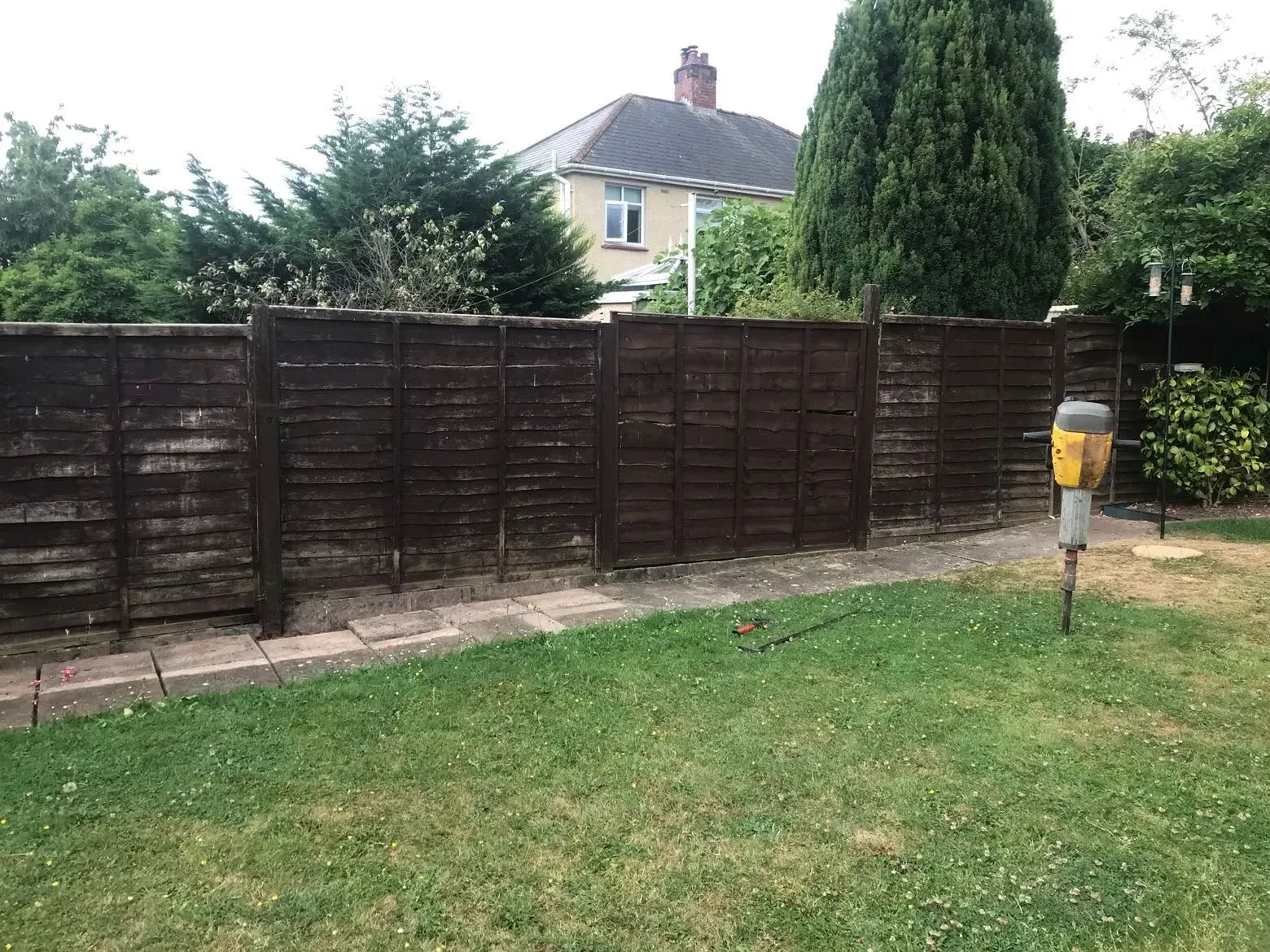
Are Your Panels Too Warped or Rotten to Brace?
If the perimeter battens on your overlap panels have rotted out or the slats have split along the grain, wedging them will only buy a few weeks before the next storm takes them out. We supply and slot in heavy-duty replacement panels across Pontypool, Newport, Cwmbran, and Monmouthshire.
How to Brace a Bowing Fence Panel With Centre Battens
Standard mass-produced overlap (waney-edge) panels are built to a tight price point. Most only have thin 16mm x 32mm perimeter battens and a single flimsy vertical strip stapled down the middle. When rain soaks one side of the horizontal slats and the sun dries the other, the panel develops a permanent belly—or worse, flexes like a trampoline in high winds.
You can add massive structural rigidity to an existing lap panel by retrofitting heavy-duty centre bracing battens:
Buy Pressure-Treated 47mm x 38mm Battens
Do not use untreated indoor roofing lath. Pick up straight, kiln-dried, pressure-treated C16/C24 battens (roughly 2" x 1.5") cut to the exact internal height between the panel's top capping rail and bottom frame rail.
Pull the Bow Out Before Screwing
Either slide the panel out onto a flat driveway/patio, or clamp the new vertical batten in place while a helper pushes against the bowed centre until the panel sits straight along a string line.
Use Exterior Screws, Not Nails
Hammering nails into a panel sitting in concrete posts will bounce off the timber and shatter the slats. Pre-drill and drive 4.0mm x 40mm exterior wood screws through the overlap points into your new vertical brace.
Support the Middle Weight
Ensure the bottom of the panel rests squarely across a concrete or treated timber gravel board. If a panel hangs in mid-air without bottom support, its own wet weight will cause the horizontal frame to sag and bow outward.
Upgrading Flimsy Lap Panels to Heavy-Duty Closeboard Bays
If you live on an exposed hillside in Pontypool, Blaenavon borders, Abergavenny, or along the coastal flats near Caldicot and Newport, budget waney-lap panels are simply a false economy. Even with wedges and extra battens, horizontal 5mm-thick slats trap rainwater along their overlaps and snap during autumn storms.
The good news is that you do not need to dig up sound concrete posts to upgrade your fence. At JDP Outdoor Solutions, we regularly upgrade tired slotted fence lines in two ways:
| Feature | Budget Waney-Lap Panel | Framed Closeboard (Featheredge) Panel |
|---|---|---|
| Pales / Slats | Thin horizontal 4mm–6mm waney slats (stapled) | Heavy vertical 22mmx100mm tapered featheredge pales |
| Rear Framing | Light perimeter battens; minimal horizontal support | 3x heavy 45mmx32mm morticed/halved horizontal backing rails |
| Fit in Slotted Posts | Loose (32mm–38mm frame in 50mm slot); prone to rattle | Snug 45mm–47mm heavy frame; minimal wind play |
| Water Shedding | Horizontal overlaps hold water & encourage moss/rot | Vertical grain sheds Welsh rain straight down to gravel board |
| Typical Valley Lifespan | 3 to 6 years (often damaged in first major storm) | 12 to 15+ years with pressure-treated timber |
Option A: Drop-In Heavy-Duty Featheredge Panels
We lift out your rattling overlap panels and slide in commercial-grade, pressure-treated vertical featheredge panels. Because these panels are built on heavy 45mm–47mm perimeter frames with three substantial horizontal backing rails, they fill the concrete post groove properly, resist bowing, and eliminate wind clatter immediately.
Option B: Converting Slotted Posts to Fixed Cant/Arris Rails
For the strongest possible boundary—or where your ground slopes steeply and slotted panels leave triangular gaps underneath—we can fit timber infill blocks or brackets into your existing posts, run continuous heavy cant rails across the bays, and nail individual vertical featheredge boards tightly across the face. Zero rattle, zero movement.
Tired of Cracked Concrete Posts & Noisy Slots?
When concrete posts crack along their reinforcing bars or timber posts rot at ground level in wet clay soil, the whole fence line starts swaying and clattering. As an accredited Birkdale DuraPost installer in Pontypool, we install cold-rolled galvanised steel posts tested to withstand wind speeds up to 110mph.
Unlike bulky slotted concrete H-posts, DuraPost allows us to screw heavy horizontal rails and closeboard pales directly into the steel channel—creating a rock-solid, rattle-free boundary that won't rot, warp, or chip.
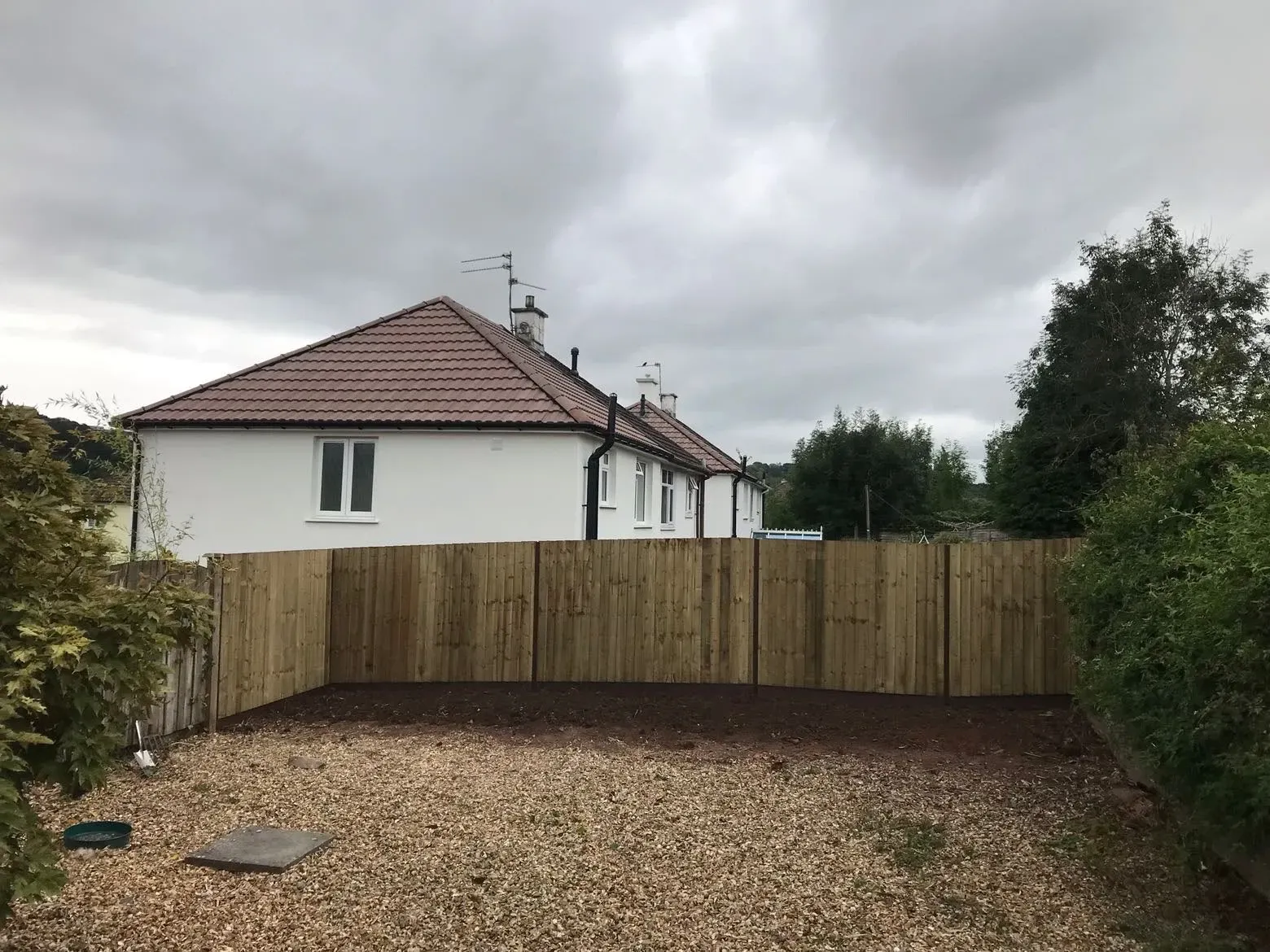
FAQs: Stopping Fence Rattle &Replacing Panels
Can I use expanding foam or exterior silicone in concrete post slots to stop rattling?
We strongly advise against squirting expanding polyurethane foam into post grooves. Foam traps rainwater against the end-grain of the timber panel frame, accelerating wet rot, and makes it a nightmare to slide the panel out cleanly when it eventually needs replacing or treating. Use removable neoprene wedges or stainless clips instead.
Can you replace my rattling lap panels without replacing the concrete posts or gravel boards?
Yes. Provided your existing concrete posts are plumb, firm in the ground, and not spalling (cracking away from rusted internal steel), we can slide out the old panels and drop in heavy-duty pressure-treated featheredge panels on our fence panel replacement service. We also take away all broken old panels under our Full Waste Carrier Licence.
Why do my fence panels keep popping out of the posts during storms?
This happens for two reasons: either the concrete posts have leaned apart over time (widening the bay beyond 1.83m so the panel only catches a few millimetres of the slot), or the panel is so thin that it bows deeply in the wind, shortening its horizontal span until one side slips free. Adding a treated timber packing batten to one side of the panel AND bracing the centre stops this immediately.
Should I cut slight gaps into my fence panels to let the wind through?
Cutting holes into a standard overlap panel ruins its structural integrity. If your boundary sits in a severe wind tunnel on a Torfaen or Monmouthshire hillside and even heavy closeboard panels struggle, consider hit-and-miss fencing (where pales are fixed alternately on the front and back of the rails) to reduce wind resistance while keeping garden privacy.
Related Services & Guides
Explore our professional fencing services in Pontypool and practical outdoor maintenance guides for South East Wales homeowners.
Fence Panel Replacement in Pont-Y-Pŵl / Pontypool
Broken or storm-damaged fence panels? JDP Outdoor Solutions offers professional fence panel replacement in Pontypool and Newport. Call 01633 603306.
TPO and Conservation Area Tree Rules in South Wales
Learn the rules for Tree Preservation Orders (TPOs) and Conservation Areas across Torfaen, Monmouthshire, and Newport before pruning or felling trees.
Spotting Ash Dieback & Fungal Decay in Garden Trees
Identify early signs of ash dieback, honey fungus, and basal rot in garden trees across Pontypool, Newport, and Monmouthshire before limbs fail.
Why Leaving Old Tree Stumps Can Harm Your Garden
Leaving felled tree stumps to rot invites honey fungus, pests, and root regrowth. Discover why stump grinding in Pontypool protects your garden.
DIY Stump Digging & Eco-Plugs vs Mechanical Removal
Compare manual digging, chemical eco-plugs, and mechanical stump grinding in Pontypool. Call JDP Outdoor Solutions on 01633 603306 for a free quote.
Birkdale DuraPost vs Concrete & Timber Fence Posts
Compare galvanised steel DuraPost with concrete and timber fence posts for South Wales gardens. Built for 110mph winds and wet soils. Call 01633 603306.
Who Owns the Hedge? Boundary Rules Before Removal
Who owns a boundary hedge? Learn how to check title deeds, planting lines, and High Hedges rules before removing hedges in Pontypool and South East Wales.
Why Patios Sink: Sub-Bases & Full Mortar Beds Explained
Discover why spot-bedding fails in wet South Wales soils and how compacted MOT Type 1 sub-bases and full mortar beds prevent rocking slabs.
What Items Can Be Taken in a Garden & Rubbish Clearance?
Find out what our licensed rubbish clearance covers across Pontypool and Torfaen, from old fencing and sheds to banned hazardous items like asbestos.
How Hedge Thickness Filters Road Noise & Gusts
Learn how dense evergreen hedges filter valley gusts and road noise better than solid barriers. Expert hedge care across Pontypool and Torfaen.
Child-Safe Latches & Self-Closing Springs for Gates
Keep toddlers and dogs safe with heavy-duty self-closing hinges and magnetic gate latches. Installed across Pontypool and South East Wales.
Sizing a New Patio: Dining Sets, BBQs & Walkways
Calculate square metre footprints for dining sets, chair pull-out clearances, and door transitions with our Pontypool patio laying specialists.
Hiding Unsightly Drain Covers in New Garden Paving
Hide unsightly drain lids in your new garden patio. See how JDP Outdoor Solutions fits recessed infill trays in Pontypool, Newport, and Monmouthshire.
Managing Slurry & Drain Runoff During Driveway Washing
Prevent blocked gullies and mud runoff during driveway pressure washing in Pontypool. Practical advice on silt traps, sludge control, and soakaways.
How Commercial Chippers Reduce Branches by 80% Volume
See how commercial hydraulic wood chippers reduce bulky conifer brash and hawthorn by 80% in minutes. Licensed green waste clearance across Pontypool.
Canopy Shaping to Stop Solar Panel & Dish Shading
High tree canopies can cut solar panel output by 40%. Learn how targeted crown reduction in Pontypool restores sunlight and satellite line of sight.
Contemporary Slatted Panels vs Solid Lap: Light & Shade
Compare hit-and-miss slatted panels with solid waney lap fencing for light flow, privacy, and wind resistance across Pontypool and South East Wales.
Why Yew & Cherry Laurel Clippings Must Leave Site Fast
Wilted yew and crushed laurel clippings pose lethal toxin risks to pets and livestock. Book licensed green waste removal in Pontypool on 01633 603306.
What a Legal Waste Transfer Note Actually Looks Like
Learn what a legal Waste Transfer Note looks like, from EWC numbers to SIC codes. Licensed rubbish removal in Pontypool and South Wales. Call 01633 603306.
Checking Old Log Piles & Compost Heaps for Slow Worms
How we safely dismantle old compost bays, sleepers, and log piles in Pontypool to protect slow worms and amphibians during licensed garden clearances.
From Your First Call to a Clear Site
JDP Outdoor Solutions is run by Jac Price from Pontnewynydd, Pontypool. Jac is registered with Natural Resources Wales as an upper-tier waste carrier (CBDU035917). Based at Pontnewynydd, Pontypool NP4 6PR.
Rated 5.0 from 6 Google reviews.Read them on Google
Recent Jobs, in Our Customers' Words
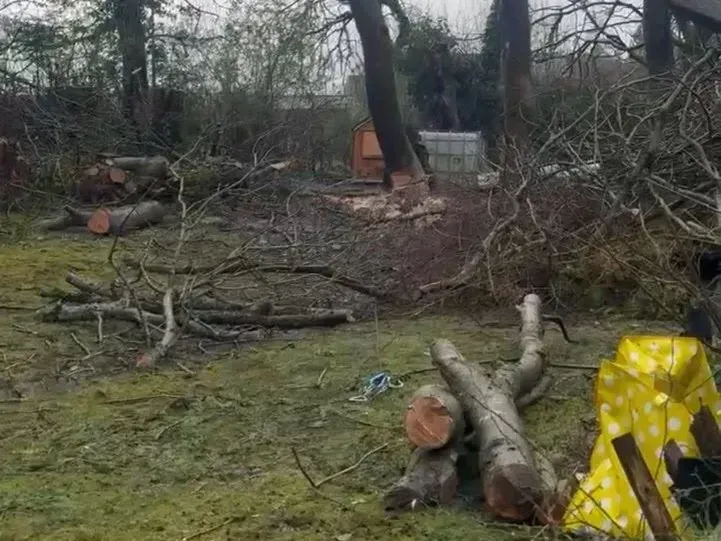
13 tall pine trees felled, stumps ground and a new fence fitted
“Jac and his team were very accommodating with dates and timing. They cut down 13 old tall pine trees, removed and ground the stumps. They completed the fence work in the specified time and left after thoroughly cleaning up the work area.
We are very pleased with the new fence.
Thank you Jac. MB.”
Hedges cut back and the garden tidied
“Had J.D.P Outdoor Solutions in to cut back our hedges and tidy up the garden. They did a brilliant job and made a huge difference to the whole area. Friendly, reliable and very tidy workers. Would definitely use them again.”
-
01
Call or Ask for a Visit
Call 01633 603306, 7am to 7pm, seven days a week, or request a quote online, and we arrange a time to look at the job.
-
02
Checks and a Clear Price
We look at the job on site and give you a clear price before any work starts. For trees, we check for a Tree Preservation Order or conservation area first. If council consent is needed, you know before the job is booked.
-
03
Careful Work on the Day
In tight gardens, trees come down in sections on rigging to protect your property. Heavy hedge cutting is planned around the bird nesting season, in line with the Wildlife and Countryside Act.
-
04
A Clear Site
Stumps can be ground below lawn level. Branches, old fencing and garden waste are taken away under our waste carrier registration to licensed South Wales transfer and recycling depots, never left in a lay-by.
Ready to Replace Rattling or Storm-Damaged Fence Panels?
Call Jac and the team on 01633 603306 for a free quote on your fencing, patio, or tree care project across Pontypool, Torfaen, Newport, Chepstow, Caldicot, and Abergavenny.